Belgium
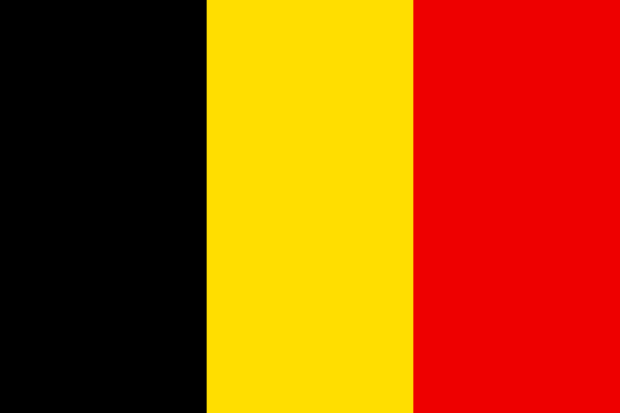
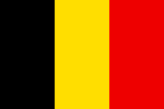
Country flag available in this resolutions
| Icon 32x21 |  |
| Icon 88x59 |  |
Belgium
Belgium, officially the Kingdom of Belgium, is a small but remarkably influential European nation nestled at the crossroads of Western Europe. Its strategic location has profoundly shaped its history, culture, and economic development, making it a vibrant and diverse country. With a rich tapestry of languages, traditions, and a complex political structure, Belgium presents a fascinating case study in nation-building and international cooperation. This article will delve into the multifaceted aspects of Belgium, exploring its demographics, economy, geography, and historical trajectory, offering a comprehensive overview of this pivotal European state.
The demographic landscape of Belgium is one of its most defining characteristics, primarily due to its linguistic divide. The country is officially trilingual, with Dutch spoken by the Flemish community in the northern region of Flanders, French spoken by the Walloon community in the southern region of Wallonia, and German spoken by a small community in the eastern part of Wallonia. This linguistic division has not only influenced cultural expressions but has also led to a unique federal political system designed to accommodate the distinct needs and identities of these communities. Flanders is the more populous region, home to approximately 60% of the countrys inhabitants, while Wallonia accounts for about 40%. Brussels, the capital city, is officially bilingual but is predominantly French-speaking and serves as a melting pot for people from all linguistic backgrounds, as well as a significant international population due to its role as the de facto capital of the European Union and NATO headquarters. Belgium’s overall population density is among the highest in Europe, a testament to its relatively small landmass and a long history of human settlement and industrialization. The age structure of Belgium’s population is relatively balanced, with a significant proportion of working-age individuals, though like many developed nations, it faces challenges related to an aging population and declining birth rates. Immigration has played a role in shaping Belgiums demographics, particularly in urban centers like Brussels, contributing to its multicultural character and enriching its social fabric with diverse traditions and perspectives. This complex demographic mosaic requires constant negotiation and compromise, a hallmark of Belgian governance.
Economically, Belgium is a highly developed and prosperous nation with an open, diversified, and highly industrialized economy. It is a founding member of the European Union and plays a crucial role in global trade, benefiting immensely from its central location and well-developed infrastructure, including major ports like Antwerp, which is one of Europe’s largest. The Belgian economy is characterized by a strong service sector, which accounts for the majority of its GDP and employment. Key service industries include finance, logistics, research and development, and tourism. Manufacturing remains vital, with significant production in sectors such as chemicals, pharmaceuticals, automotive manufacturing, and food processing. The country boasts a highly skilled workforce, a testament to its robust education system. Belgiums economic policy is largely aligned with that of the European Union, with a commitment to fiscal discipline and free trade. Its membership in the Eurozone means it utilizes the euro as its currency, facilitating seamless economic transactions within the single market. The country’s export-oriented economy makes it highly susceptible to global economic trends, but its resilience and adaptability have allowed it to navigate various economic challenges. Belgium also has a strong tradition of social partnership, with close cooperation between employers, trade unions, and the government, which contributes to industrial peace and a relatively stable labor market. The nation’s commitment to innovation and technological advancement further strengthens its economic standing on the international stage.
Geographically, Belgium is a small country, covering an area of approximately 30,528 square kilometers, making it one of the smallest nations in Europe. Its landscape is characterized by three distinct regions: the coastal plain, the central plateau, and the Ardennes highlands in the southeast. The coastal plain, a narrow strip along the North Sea, is largely flat and dominated by sand dunes and reclaimed land. Moving inland, the central plateau is characterized by rolling hills and fertile agricultural land, supporting a significant portion of Belgiums farming output. The Ardennes, a densely forested and hilly region, offers a more rugged terrain with valleys, rivers, and caves, and is a popular destination for nature lovers and outdoor activities. Belgium shares borders with four countries: France to the south and west, Germany and Luxembourg to the east, and the Netherlands to the north. This central position within Western Europe has historically made it a natural transit route and a battleground for European powers, earning it the moniker “the battlefield of Europe.” Its extensive network of navigable rivers, canals, and modern highways further enhances its logistical importance, facilitating the movement of goods and people across the continent. Despite its small size, Belgiums diverse topography supports a variety of ecosystems and contributes to its rich biodiversity.
Belgiums history is a long and complex narrative, marked by periods of great power, foreign domination, and ultimately, the establishment of a modern, federal state. Its strategic location has meant it has been a prize for various empires and kingdoms throughout history, from Roman Gaul to the Frankish kingdoms and later the Duchy of Burgundy. In the medieval period, cities like Bruges and Ghent flourished as centers of trade and art. The region later fell under Habsburg rule, experiencing periods of both prosperity and conflict. The 19th century was a pivotal time, witnessing the Belgian Revolution of 1830, which led to its independence from the Netherlands and the establishment of a constitutional monarchy. The subsequent decades saw significant industrialization and the expansion of its colonial empire, most notably the Congo Free State. The 20th century brought immense hardship, as Belgium was invaded and occupied by Germany in both World War I and World War II, suffering immense destruction and loss of life. These experiences profoundly shaped the nations post-war identity and its commitment to international cooperation, leading to its role in the formation of the European Economic Community, the precursor to the European Union. The post-war era also saw increasing recognition of the linguistic and cultural differences within the country, leading to a series of state reforms that transformed Belgium into a federal state with significant powers devolved to its regions and communities. This ongoing process of federalization reflects Belgiums enduring effort to balance unity with diversity, a challenge that continues to define its political and social landscape.
Information about country Belgium
Automated text translation, excuse errors, please!
Informations are from the publication CIA The World Factbook.
Country Belgium is situated in a location / continent Europe. Belgium has an area of 30 528 km2 and 10 438 353 residents. The highest point has a height 694 above sea level. and it is called Signal de Botrange. The lowest point is located at the level of 0 above sea level and it is named North Sea. System of government is constitutional monarchy and the date of independence 4th October 1830. The capital city is Brussels. Belgium has the international abbreviation BE.
Belgium - economy
Total gross domestic product (GDP) is 418 600 000 000 $. Total gross domestic product per capita in purchasing power parity is 38 200 $. GDP grows by 1.90 % a year. Inflation (consumer price index) is equal to 3.50 % a year. Belgium have 5 177 000 working-age population (from a total population 10 438 353 people). Unemployment is at 7.70 %. Belgium issued 11.80 % GDP to healt care and 1,30 % GDP to army. The public debt of the country is 99.70 % GDP. The total amount of foreign debt is 1 399 000 000 000 USD.
Belgium - transport and telecommunications
Belgium has 153 595 km of roads, 3 233 km of railway lines and 43 airports. The total length of waterways (navigable rivers, canals, etc.) is 2 043 km. There is registered 87 ships.
Number of active mobile phones (sim card) in the country Belgium is 12 541 000. Number of active fixed telephone lines is 4 631 000. Belgium has 8 113 000 internet users, who have the available 5 180 000 Internet connections. Belgium has been assigned a domain first Choose range .be.
Belgium - demography
As suggested above, Belgium has 10 438 353 people. Population growth is in the amount 0.06 % per year. Number of children born per 1000 population per year is 10.03.Every mother has average 1.65 children. The infant mortality rate is 4.28 and maternal mortality 8.00 deaths per 100,000 births. Average estimated life expectancy makes 79.65 years. Mortality is 10.63 people per 1000 population per year.
Belgium - energetics
Belgium consumes a year 78 530 000 000 kWh of electricity. Annual electricity production is 89 250 000 000 kWh in power plants with a total installed electrical capacity 17 500 000 kW. Belgium exports 11 840 000 000 kWh and imports 12 410 000 000 kWh of electricity per year Energy mix of power generation is as follows: fossil fuels: 46.4 %, nuclear energy: 33.7 %, renewable: 11.7 %, hydropower: 0.6 %.
Countries and flags
Bolívie
Flags
Forbidden
You don't have permission to access /engine.php on this server.
Apache/2.2.15 (CentOS) Server at textlinks.net Port 80
Flags of the World countries
Dále doporučujeme:
Partnerské internetové stránkyDoporučené internetové odkazy
Tipy na zajímavé weby
Zajímavé internetové odkazy
Doporučené odkazy
 |
 |
 |
 |
 |
 |
 |
 |
 |
 |
 |
 |
 |
 |
 |
 |
 |
 |
 |