Afghanistan
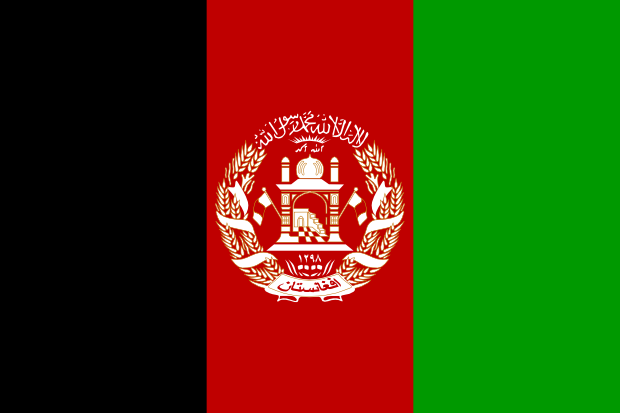
Country flag available in this resolutions
| Icon 32x21 |  |
| Icon 88x59 |  |
Afghanistan
Afghanistan: A Land of Enduring Resilience and Complex Realities
Afghanistan, officially known as the Islamic Emirate of Afghanistan, is a landlocked country situated at the crossroads of Central and South Asia. Its strategic location has historically made it a coveted territory and a pivotal point for trade and cultural exchange, but also a battleground for empires and ideologies. This mountainous nation, characterized by its rugged terrain and diverse ethnic tapestry, has endured centuries of conflict, foreign intervention, and internal strife, shaping its unique identity and presenting a complex set of challenges and opportunities for its people. Understanding Afghanistan requires delving into its intricate demographics, its historically fragile yet resilient economy, its challenging geography, and its tumultuous, deeply layered history.
The demographic landscape of Afghanistan is as varied as its terrain. The country is home to a multitude of ethnic groups, each with its own distinct language, culture, and traditions. The Pashtuns are the largest ethnic group, comprising roughly 42% of the population, and are predominantly found in the southern and eastern regions. They are known for their strong tribal structures and the Pashtunwali code of honor. Following them are the Tajiks, who make up approximately 27% of the population and are concentrated in the north and west, often speaking Dari, a dialect of Persian. The Hazaras, a minority group of Persian-speaking Shi’a Muslims, constitute around 9% of the population and are primarily located in the central highlands, known as Hazarajat. Other significant ethnic groups include the Uzbeks, Turkmen, Aimaq, and Baloch, each contributing to the rich mosaic of Afghan society. The official languages are Pashto and Dari, with Dari serving as the lingua franca in many urban centers and government affairs. The vast majority of the population adheres to Islam, with Sunni Islam being the dominant branch, while a significant minority practices Shi’a Islam, primarily among the Hazara community. Life expectancy in Afghanistan remains one of the lowest in the world, a grim testament to the decades of conflict, inadequate healthcare infrastructure, and persistent poverty. The population is relatively young, with a large proportion of individuals under the age of 25, a demographic dividend that could be a powerful engine for development if properly harnessed, but also a potential source of instability if educational and employment opportunities are lacking. Urbanization is on the rise, with cities like Kabul, Kandahar, and Herat experiencing significant population growth, placing additional strain on already limited resources and infrastructure.
Afghanistan’s economy has historically been agrarian-based and remains heavily reliant on agriculture, despite the country’s mineral wealth. For millennia, farmers have cultivated wheat, corn, rice, and various fruits and vegetables in the fertile valleys and plains. However, the agricultural sector is highly vulnerable to drought, erratic rainfall, and the ongoing challenges of landmines and insecurity, which hinder cultivation and access to markets. The informal economy plays a substantial role, with many Afghans engaging in small-scale trade, crafts, and services to survive. Remittances from Afghans working abroad, particularly in neighboring countries like Iran and Pakistan, have also been a crucial source of income for many families. The country is blessed with significant mineral resources, including iron ore, copper, gold, and precious stones, as well as untapped reserves of lithium, which could potentially transform the nation’s economic fortunes. However, the extraction and development of these resources have been severely hampered by political instability, corruption, lack of infrastructure, and the ongoing security concerns, making it difficult to attract substantial foreign investment. The opium poppy cultivation and illicit drug trade have unfortunately become a significant, albeit destructive, component of the Afghan economy, fueled by demand in international markets and providing a livelihood for many, while simultaneously perpetuating corruption and violence. International aid has been a critical lifeline for Afghanistan for decades, propping up essential services and humanitarian efforts. However, the fluctuating levels of aid, coupled with concerns about its effective distribution and the country’s ability to achieve self-sufficiency, present a persistent challenge. The current economic situation is dire, exacerbated by the withdrawal of international forces and the subsequent imposition of sanctions, leading to widespread poverty and humanitarian crises.
The geography of Afghanistan is defined by its dramatic and challenging mountainous terrain, which has profoundly influenced its history, culture, and development. The country is dominated by the Hindu Kush mountain range, a formidable barrier that stretches across the northeastern part of the nation, with peaks reaching over 7,000 meters. These imposing mountains have historically served as natural defenses, isolating communities and making transportation and communication difficult. The rugged landscape is interspersed with high plateaus, deep valleys, and arid deserts. The northern regions feature fertile plains and river valleys, such as the Amu Darya basin, which support agriculture. To the south and west lie vast, arid and semi-arid regions, including the Registan Desert and the Dasht-e Margo (Desert of Death), characterized by sand dunes and sparse vegetation. Water scarcity is a persistent issue in many parts of the country, with rivers like the Helmand and Hari Rud being crucial for irrigation but subject to seasonal fluctuations and the pressures of increasing demand. The climate is continental, with extreme temperatures. Summers are hot and dry, while winters are bitterly cold, especially in the mountainous regions, where heavy snowfall can cut off remote areas for months. This challenging geography has historically made centralized governance difficult and has contributed to the resilience and independence of local communities. It also presents significant logistical hurdles for infrastructure development, such as roads and railways, which are essential for economic integration and national unity. The country’s landlocked status further complicates its trade and connectivity, requiring reliance on its neighbors for access to international markets.
Afghanistan’s history is a long and complex tapestry woven with threads of conquest, resistance, and internal conflict. For millennia, it has been a strategic crossroads, a land coveted by empires due to its location along ancient trade routes, including the Silk Road. The region was part of the Achaemenid Empire, the Hellenistic empires of Alexander the Great, and later the Kushan Empire. The advent of Islam in the 7th century profoundly shaped Afghan society, with Arab conquests and subsequent Turkic and Persian dynasties leaving their mark. The Mongol invasions in the 13th century brought widespread destruction but also laid the groundwork for new empires. The Durrani Empire, founded by Ahmad Shah Durrani in the mid-18th century, is considered the precursor to modern Afghanistan, establishing a unified state. The 19th century saw Afghanistan become a buffer state between the British and Russian empires during the “Great Game,” a period of intense geopolitical rivalry that involved several Anglo-Afghan wars, which Afghanistan, despite immense hardship, managed to resist outright conquest. The early 20th century brought attempts at modernization and reform under rulers like King Amanullah Khan, but these efforts were often met with resistance from conservative elements. The Soviet invasion in 1979 marked a turning point, igniting a brutal war that lasted a decade and devastated the country. The Soviet withdrawal in 1989 was followed by a devastating civil war among mujahideen factions, leading to the rise of the Taliban in the mid-1990s, who imposed a strict interpretation of Sharia law and ruled the country until their overthrow by a US-led coalition in 2001 following the September 11th attacks. The subsequent two decades were characterized by a protracted insurgency, nation-building efforts, and a constant struggle against the Taliban and other militant groups. The withdrawal of US and NATO forces in 2021 led to the swift return of the Taliban to power, ushering in a new era of uncertainty and humanitarian challenges for the Afghan people, who have demonstrated remarkable resilience in the face of relentless adversity.
Information about country Afghanistan
Automated text translation, excuse errors, please!
Informations are from the publication CIA The World Factbook.
Country Afghanistan is situated in a location / continent South Asia. Afghanistan has an area of 652 230 km2 and 30 419 928 residents. The highest point has a height 7 485 above sea level. and it is called Nowshak. The lowest point is located at the level of 258 above sea level and it is named Amu Darya. System of government is Islamic Republic of and the date of independence 19th August 1919. The capital city is Kabul. Afghanistan has the international abbreviation AF.
Afghanistan - economy
Total gross domestic product (GDP) is 30 110 000 000 $. Total gross domestic product per capita in purchasing power parity is 1 000 $. GDP grows by 5.70 % a year. Inflation (consumer price index) is equal to 7.70 % a year. Afghanistan have 15 000 000 working-age population (from a total population 30 419 928 people). Unemployment is at 35.00 %. Afghanistan issued 7.40 % GDP to healt care and 1,90 % GDP to army. The total amount of foreign debt is 1 280 000 000 USD.
Afghanistan - transport and telecommunications
Afghanistan has 42 150 km of roads and 52 airports. The total length of waterways (navigable rivers, canals, etc.) is 1 200 km.
Number of active mobile phones (sim card) in the country Afghanistan is 17 558 000. Number of active fixed telephone lines is 13 500. Afghanistan has 1 000 000 internet users, who have the available 121 Internet connections. Afghanistan has been assigned a domain first Choose range .af.
Afghanistan - demography
As suggested above, Afghanistan has 30 419 928 people. Population growth is in the amount 2.22 % per year. Number of children born per 1000 population per year is 39.30.Every mother has average 5.64 children. The infant mortality rate is 121.63 and maternal mortality 460.00 deaths per 100,000 births. Average estimated life expectancy makes 49.72 years. Mortality is 14.59 people per 1000 population per year.
Afghanistan - energetics
Afghanistan consumes a year 2 226 000 000 kWh of electricity. Annual electricity production is 913 100 000 kWh in power plants with a total installed electrical capacity 489 100 kW. Afghanistan exports 0 kWh and imports 1 377 000 000 kWh of electricity per year Energy mix of power generation is as follows: fossil fuels: 23.5 %, nuclear energy: 0 %, renewable: 0.0 %, hydropower: 76.5 %.
Countries and flags
Asijské státy
Flags
Forbidden
You don't have permission to access /engine.php on this server.
Apache/2.2.15 (CentOS) Server at textlinks.net Port 80
Flags of the World countries
Dále doporučujeme:
Tipy na zajímavé webyNaše tipy na zajímavé stránky
Naše tipy na užitečné weby
Odkazy na zajímavé weby
Doporučené odkazy a zdroje obsahu
 |
 |
 |
 |
 |
 |
 |
 |
 |
 |
 |
 |
 |
 |
 |
 |
 |
 |
 |