Anguilla
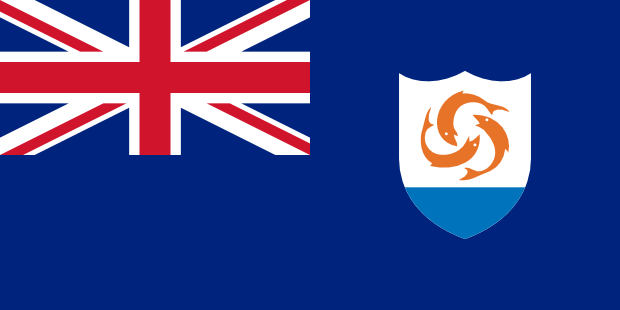
Country flag available in this resolutions
| Icon 32x16 |  |
| Icon 88x44 |  |
Anguilla
Here is an article about Anguilla, approximately 3000 characters long, written in English, with the specified formatting.
Anguilla, a jewel of the Caribbean, is a British Overseas Territory located in the northeastern Caribbean Sea, about 250 kilometers (155 miles) east of Puerto Rico and north of Saint Martin. The island nation is a part of the Lesser Antilles archipelago, specifically the Leeward Islands. Its name, derived from the Spanish word for eel, “anguila,” aptly describes its elongated, low-lying shape. Anguilla comprises the main island of Anguilla and a number of smaller islands, islets, and cays, many of which are uninhabited. The geography is characterized by its flat topography, a stark contrast to the volcanic mountains found on many neighboring islands. The highest point on Anguilla is only about 65 meters (213 feet) above sea level, making it particularly vulnerable to rising sea levels and hurricanes. The island is fringed with pristine white-sand beaches, crystal-clear turquoise waters, and vibrant coral reefs, forming the very foundation of its natural beauty and its primary economic driver. The climate is tropical maritime, with warm temperatures year-round, moderated by trade winds. The dry season typically runs from February to April, followed by a wetter, warmer period from September to November. The landscape, while beautiful, is relatively arid, with limited freshwater resources, necessitating desalination and rainwater harvesting.
The demographic profile of Anguilla is relatively small, with a population hovering around 15,000 people. The majority of the population is of African descent, a legacy of the transatlantic slave trade. There is also a significant minority of European and mixed-race heritage. The population is concentrated in a few settlements, with The Valley serving as the capital and administrative center. Anguilla has a relatively young population, with a median age in the early thirties, and a high life expectancy, indicative of good healthcare services for a small island nation. English is the official language, and the culture is a vibrant blend of African, British, and Caribbean influences, evident in its music, dance, cuisine, and festivals. The Anguillan people are known for their friendly and welcoming nature, often referred to as “Friendly Anguilla.” The education system is well-established, with a high literacy rate, and the healthcare infrastructure, while modest, is adequate for the populations needs. There is a strong sense of community and tradition, with family ties playing a crucial role in social life.
The economy of Anguilla is overwhelmingly dependent on tourism, particularly luxury tourism. The island has cultivated an image of exclusivity and tranquility, attracting affluent travelers seeking pristine beaches, high-end accommodations, and world-class dining. The tourism sector encompasses a wide range of services, including hotels, resorts, villas, restaurants, water sports, and excursions. This reliance on tourism makes Anguilla’s economy susceptible to global economic downturns and external shocks, such as natural disasters. Historically, Anguilla’s economy was based on agriculture, particularly sugar cane and livestock, and later on salt production. However, these industries have largely declined, replaced by the more lucrative tourism sector. The financial services sector has also grown in importance, offering offshore banking and insurance services, contributing to the island’s GDP. The government actively seeks to diversify the economy, exploring opportunities in areas such as renewable energy and niche agriculture, but tourism remains the undisputed king. The currency used is the East Caribbean Dollar (XCD), though US Dollars are widely accepted.
Anguilla’s history is a fascinating narrative of resilience and self-determination. Initially inhabited by the indigenous Arawak and Carib peoples, the island was first sighted by Europeans in the late 15th century. However, due to its arid nature and lack of significant mineral wealth, it was largely overlooked by major colonial powers for a considerable period. The British established a presence in the 17th century, and Anguilla was administered as part of Saint Kitts and Nevis. This arrangement proved contentious, and Anguilla launched a rebellion in 1967, declaring itself an independent republic. This brief period of self-governance was followed by British intervention and eventual re-establishment of British rule. The island was granted its own House of Assembly and a Chief Minister in 1982, and in 1991, Anguilla achieved a greater degree of autonomy, becoming a separate British Overseas Territory. The struggle for self-determination and the desire to maintain its unique identity have been defining characteristics of Anguillas modern history. The islands past is also marked by its involvement in the salt trade, with salt ponds being a significant feature of its economic history. The legacy of these historical periods continues to shape Anguilla’s present-day identity and aspirations.
The political system of Anguilla is a parliamentary democracy under a constitutional monarchy. The head of state is the British monarch, represented by a Governor. The head of government is the Chief Minister, who leads the Executive Council. The legislative branch is the House of Assembly, composed of elected representatives. Anguilla has a stable political environment, with democratic elections held regularly. The island’s governance is focused on managing its economy, preserving its natural environment, and ensuring the well-being of its citizens. International relations are primarily conducted through the United Kingdom, though Anguilla participates in regional organizations like CARICOM, albeit with observer status. The government places a strong emphasis on sustainable development, seeking to balance economic growth with environmental protection. This includes efforts to conserve its marine ecosystems, manage waste effectively, and invest in renewable energy sources. The island’s commitment to preserving its natural beauty is paramount to its long-term economic viability and its appeal to discerning visitors. The future of Anguilla is intrinsically linked to its ability to maintain its unique character while adapting to the challenges and opportunities of the 21st century.
Information about country Anguilla
Automated text translation, excuse errors, please!
Informations are from the publication CIA The World Factbook.
Country Anguilla is situated in a location / continent Central America. Anguilla has an area of 91 km2 and 15 423 residents. The highest point has a height 65 above sea level. and it is called Crocus Hill. The lowest point is located at the level of 0 above sea level and it is named Caribbean Sea. The capital city is The Valley. Anguilla has the international abbreviation AV.
Anguilla - economy
Total gross domestic product (GDP) is 175 400 000 $. Total gross domestic product per capita in purchasing power parity is 12 200 $. GDP grows by -8.50 % a year. Inflation (consumer price index) is equal to 2.80 % a year. Anguilla have 6 049 working-age population (from a total population 15 423 people). Unemployment is at 8.00 %. The total amount of foreign debt is 8 800 000 USD.
Anguilla - transport and telecommunications
Anguilla has 175 km of roads and 3 airports.
Number of active mobile phones (sim card) in the country Anguilla is 26 000. Number of active fixed telephone lines is 6 200. Anguilla has 3 700 internet users, who have the available 283 Internet connections. Anguilla has been assigned a domain first Choose range .ai.
Anguilla - demography
As suggested above, Anguilla has 15 423 people. Population growth is in the amount 2.15 % per year. Number of children born per 1000 population per year is 12.90.Every mother has average 1.75 children. The infant mortality rate is 3.44 .Average estimated life expectancy makes 80.98 years. Mortality is 4.41 people per 1000 population per year.
Anguilla - energetics
.
Countries and flags
Indonésie
Flags
Forbidden
You don't have permission to access /engine.php on this server.
Apache/2.2.15 (CentOS) Server at textlinks.net Port 80
Flags of the World countries
Dále doporučujeme:
Zajímavé internetové odkazyOdkazy na partnerské weby
Odkazy na užitečné webové stránky
Zajímavé linky na nejrůznější weby
Linky na partnerské weby
 |
 |
 |
 |
 |
 |
 |
 |
 |
 |
 |
 |
 |
 |
 |
 |
 |
 |
 |