Azerbaijan
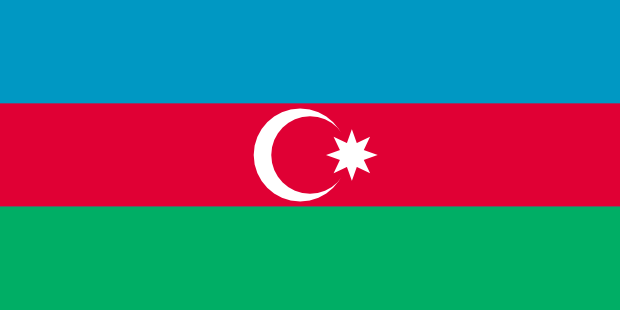
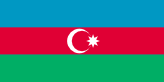
Country flag available in this resolutions
| Icon 32x16 |  |
| Icon 88x44 |  |
Azerbaijan
Azerbaijan: A Crossroads of Continents and Cultures
Azerbaijan, officially the Republic of Azerbaijan, is a fascinating nation situated at the crossroads of Eastern Europe and Western Asia, bordered by the Caspian Sea to the east, Russia to the north, Georgia to the northwest, Armenia to the west, and Iran to the south. This strategic location has profoundly shaped its history, culture, and economy, making it a land of diverse influences and rich heritage. With a territory encompassing plains, mountains, and coastlines, Azerbaijan offers a striking geographical tapestry, from the snow-capped peaks of the Greater Caucasus Mountains to the fertile lowlands and the unique semi-desert landscapes. The nation’s capital and largest city, Baku, a vibrant metropolis on the Caspian Sea, stands as a testament to Azerbaijan’s dynamic evolution, showcasing a captivating blend of ancient architectural wonders and futuristic skyscrapers. This article delves into the multifaceted aspects of Azerbaijan, exploring its demographics, economy, geography, and historical trajectory, painting a comprehensive picture of this intriguing country.
The demographic landscape of Azerbaijan is characterized by its ethnic homogeneity, with the Azerbaijani people forming the vast majority of the population. The official language is Azerbaijani, a Turkic language closely related to Turkish. While the country is predominantly Muslim, with Shia Islam being the dominant denomination, Azerbaijan boasts a significant degree of religious tolerance and secularism, a legacy of its Soviet past. The population is relatively young, with a substantial proportion of individuals under the age of 30, contributing to a dynamic and evolving society. Urbanization is a significant trend, with a large percentage of the population residing in cities, particularly in Baku and its surrounding metropolitan area. This concentration in urban centers drives economic activity and cultural exchange, fostering a sense of national identity that is deeply rooted in shared history and language, yet open to external influences. The presence of various ethnic minorities, including Lezgins, Talysh, Russians, and Avars, adds to the cultural richness of Azerbaijan, though they represent a smaller segment of the overall population.
Azerbaijan’s economy has undergone a remarkable transformation over the past few decades, largely driven by its abundant oil and gas reserves. The country is a significant producer and exporter of hydrocarbons, with the Caspian Sea serving as a crucial source of these valuable resources. The State Oil Company of the Azerbaijan Republic (SOCAR) plays a pivotal role in the nation’s energy sector, overseeing exploration, production, and refining. Beyond the energy industry, Azerbaijan has been actively diversifying its economy, with a growing focus on sectors such as agriculture, tourism, and transportation. The development of the East-West transport corridor, including the Baku-Tbilisi-Kars railway, is enhancing Azerbaijan’s position as a key transit hub, connecting Europe and Asia. Investments in infrastructure, including modern highways, airports, and port facilities, are further bolstering its economic potential. The government’s commitment to attracting foreign investment and fostering a favorable business environment is crucial for sustained economic growth and the creation of new employment opportunities, moving beyond a sole reliance on the volatile energy markets.
Geographically, Azerbaijan presents a diverse and captivating terrain. The Greater Caucasus Mountains, forming the northern border, are home to some of the highest peaks in the region, offering breathtaking vistas and opportunities for mountaineering and winter sports. South of these imposing mountains lie fertile plains and river valleys, including the Kura-Aras lowland, which is a vital agricultural region. The country’s eastern flank is defined by the Caspian Sea, the world’s largest inland body of water, with a coastline stretching for hundreds of kilometers. This coastal region is not only a source of natural resources but also a hub for trade and tourism, with popular resort towns and beaches. Azerbaijan also possesses a unique geological feature: mud volcanoes. The country accounts for a significant proportion of the world’s mud volcanoes, a fascinating natural phenomenon that adds to its distinct geographical identity. The climate varies considerably across the country, from the subtropical conditions along the Caspian coast to the alpine climate in the mountainous regions, offering a wide range of natural environments to explore and appreciate.
The history of Azerbaijan is a long and complex tapestry woven from centuries of conquests, migrations, and cultural exchanges. Ancient civilizations flourished in this region, leaving behind a rich archaeological heritage. The territory of modern Azerbaijan has been influenced by numerous empires, including the Persian, Roman, Arab, Mongol, and Ottoman empires, each leaving its indelible mark on the nation’s culture, language, and traditions. The establishment of the Shirvanshah dynasty in the 9th century marked a significant period of local rule and cultural flourishing. Later, the region came under the influence of the Safavid and Qajar dynasties of Persia. The 19th century saw the division of Azerbaijan between the Russian and Persian empires, with the northern part eventually becoming part of the Russian Empire. Following the collapse of the Russian Empire, Azerbaijan declared its independence in 1918, forming the Azerbaijan Democratic Republic, the first secular democratic republic in the Muslim world. However, this independence was short-lived, as Azerbaijan was incorporated into the Soviet Union in 1920. During the Soviet era, Azerbaijan experienced industrialization and significant social changes, but also faced periods of political repression and economic control. The dissolution of the Soviet Union in 1991 led to Azerbaijan regaining its independence, ushering in a new era of nation-building and geopolitical reorientation. The subsequent Nagorno-Karabakh conflict with Armenia has been a defining challenge in its post-independence history, significantly impacting its political landscape and regional relations.
Information about country Azerbaijan
Automated text translation, excuse errors, please!
Informations are from the publication CIA The World Factbook.
Country Azerbaijan is situated in a location / continent Middle East. Azerbaijan has an area of 86 600 km2 and 9 493 600 residents. The highest point has a height 4 485 above sea level. and it is called Bazarduzu Dagi. The lowest point is located at the level of -28 above sea level and it is named Caspian Sea. System of government is republic and the date of independence 30th August 1991. The capital city is Baku (Baki, Baky). Azerbaijan has the international abbreviation AJ.
Azerbaijan - economy
Total gross domestic product (GDP) is 94 250 000 000 $. Total gross domestic product per capita in purchasing power parity is 10 300 $. GDP grows by 0.10 % a year. Inflation (consumer price index) is equal to 8.10 % a year. Azerbaijan have 6 119 000 working-age population (from a total population 9 493 600 people). Unemployment is at 1.00 %. Azerbaijan issued 5.80 % GDP to healt care and 2,60 % GDP to army. The public debt of the country is 5.50 % GDP. The total amount of foreign debt is 4 074 000 000 USD.
Azerbaijan - transport and telecommunications
Azerbaijan has 59 141 km of roads, 2 918 km of railway lines and 37 airports. There is registered 90 ships.
Number of active mobile phones (sim card) in the country Azerbaijan is 10 120 000. Number of active fixed telephone lines is 1 684 000. Azerbaijan has 2 420 000 internet users, who have the available 29 968 Internet connections. Azerbaijan has been assigned a domain first Choose range .az.
Azerbaijan - demography
As suggested above, Azerbaijan has 9 493 600 people. Population growth is in the amount 1.02 % per year. Number of children born per 1000 population per year is 17.30.Every mother has average 1.92 children. The infant mortality rate is 28.76 and maternal mortality 43.00 deaths per 100,000 births. Average estimated life expectancy makes 71.32 years. Mortality is 7.13 people per 1000 population per year.
Azerbaijan - energetics
Azerbaijan consumes a year 13 480 000 000 kWh of electricity. Annual electricity production is 17 850 000 000 kWh in power plants with a total installed electrical capacity 5 798 000 kW. Azerbaijan exports 380 000 000 kWh and imports 110 000 000 kWh of electricity per year Energy mix of power generation is as follows: fossil fuels: 82.3 %, nuclear energy: 0 %, renewable: 0.0 %, hydropower: 17.7 %. The country Azerbaijan is harvested annually 987 000 barrels of oil.
Countries and flags
Madagaskar
Flags
Forbidden
You don't have permission to access /engine.php on this server.
Apache/2.2.15 (CentOS) Server at textlinks.net Port 80
Flags of the World countries
Dále doporučujeme:
Zajímavé webové stránkyNaše tipy na užitečné weby
Odkazy na zajímavé weby
Tipy na zajímavé weby
Zajímavé internetové odkazy
 |
 |
 |
 |
 |
 |
 |
 |
 |
 |
 |
 |
 |
 |
 |
 |
 |
 |
 |