Belarus
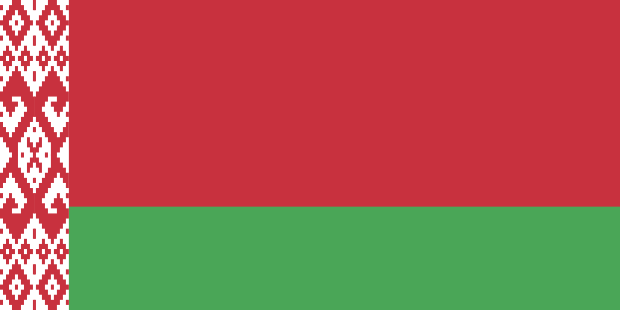
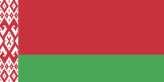
Country flag available in this resolutions
| Icon 32x16 |  |
| Icon 88x44 |  |
Belarus
Here is an article about Belarus, approximately 3000 characters long, written in English, using Czech quotation marks „“ and bold text with tags, without or tags.
Belarus: A Land of Forests, Lakes, and a Complex Present
Belarus, officially the Republic of Belarus, is a landlocked country situated in Eastern Europe, bordered by Russia to the east and northeast, Ukraine to the south, Poland to the west, and Lithuania and Latvia to the northwest. Its name, meaning „White Rus“, hints at its historical and cultural connections to the broader East Slavic world. The country is characterized by vast, flat plains, extensive forests, and numerous lakes, earning it the moniker „Europe’s lungs“ due to its significant forest cover. The Belarusian landscape is predominantly agricultural, with fertile black earth supporting a range of crops, though industry plays a significant role in its economy. This geographical setting has profoundly shaped its history, influencing its development, its interactions with neighboring powers, and its current geopolitical position. The countrys relative isolation, due to its landlocked nature and historical political alignments, has contributed to a unique cultural identity that blends Eastern and Western European influences.
The demographic profile of Belarus presents a picture of a nation grappling with several key trends. With an estimated population of around 9.3 million people, Belarus has experienced a gradual population decline in recent decades. This trend is largely attributed to a combination of low birth rates and emigration, particularly among younger, educated individuals seeking better opportunities abroad. The population is relatively homogeneous, with ethnic Belarusians forming the vast majority, followed by significant Russian and smaller Polish and Ukrainian minorities. The official languages are Belarusian and Russian, with Russian being more widely spoken in everyday life and government. The country has a relatively high urbanization rate, with a substantial portion of the population residing in cities, the largest of which is the capital, Minsk. Life expectancy, while improving, remains lower than in many Western European countries, and the age structure of the population shows a significant proportion of older citizens, posing challenges for the future workforce and social welfare systems. The government has implemented various policies aimed at encouraging higher birth rates and retaining skilled workers, but these efforts have met with limited success thus far. The cultural landscape is deeply rooted in Orthodox Christianity, though there are also Catholic and Protestant minorities.
Economically, Belarus operates under a model that retains strong state control, a legacy of its Soviet past. While reforms have been introduced to encourage private enterprise, the state still dominates key sectors such as heavy industry, agriculture, and energy. The country is a significant producer and exporter of potash fertilizers, heavy machinery, and agricultural products. Russia remains its primary trading partner and economic ally, with close integration in areas like the Eurasian Economic Union. However, this reliance on Russia also exposes Belarus to economic fluctuations and geopolitical pressures. The economy has faced challenges, including periods of inflation, currency devaluation, and the need for modernization of its industrial base. International sanctions, imposed by Western countries in response to political events, have also impacted its economic development, limiting access to certain markets and financial resources. Efforts are underway to diversify its economy and attract foreign investment, but the prevailing state-dominated structure presents significant hurdles to achieving rapid and sustainable growth. The government actively promotes its industrial capabilities, emphasizing sectors like IT, which has seen some growth, but the overall economic picture is complex and deeply intertwined with its political relationships.
The history of Belarus is a long and often tumultuous one, marked by periods of both independence and foreign domination. Its early history is intertwined with the Kievan Rus and the Grand Duchy of Lithuania, a powerful medieval state that encompassed much of modern-day Belarus, Ukraine, and Lithuania. This period saw the flourishing of Belarusian culture and language. Later, the region became part of the Polish-Lithuanian Commonwealth, a union that brought further cultural exchange but also internal strife. The partitions of Poland in the late 18th century led to Belarus being absorbed into the Russian Empire, where it remained for over a century. The early 20th century brought further upheaval with World War I, the Russian Revolution, and a brief period of independence as the Belarusian Peoples Republic, which was quickly suppressed. The country then became the Belarusian Soviet Socialist Republic within the Soviet Union, enduring immense suffering during World War II, which devastated its population and infrastructure. Following the collapse of the Soviet Union in 1991, Belarus declared its independence. Since then, its political trajectory has been characterized by strong presidential rule, with Alexander Lukashenko holding power since 1994. The countrys post-Soviet history has been marked by efforts to maintain close ties with Russia, while simultaneously facing internal dissent and international criticism regarding its human rights record and democratic processes. The legacy of its historical experiences, from periods of great cultural achievement to devastating wars and prolonged foreign rule, continues to shape its national identity and its aspirations for the future. The country’s historical narrative is often contested, with different interpretations of its past influencing present-day political discourse and national consciousness.
Information about country Belarus
Automated text translation, excuse errors, please!
Informations are from the publication CIA The World Factbook.
Country Belarus is situated in a location / continent Europe. Belarus has an area of 207 600 km2 and 9 643 566 residents. The highest point has a height 346 above sea level. and it is called Dzyarzhynskaya Hara. The lowest point is located at the level of 90 above sea level and it is named Nyoman River. System of government is republic and the date of independence 25th August 1991. The capital city is Minsk. Belarus has the international abbreviation BO.
Belarus - economy
Total gross domestic product (GDP) is 143 600 000 000 $. Total gross domestic product per capita in purchasing power parity is 15 200 $. GDP grows by 5.30 % a year. Inflation (consumer price index) is equal to 52.40 % a year. Belarus have 5 000 000 working-age population (from a total population 9 643 566 people). Unemployment is at 1.00 %. Belarus issued 5.80 % GDP to healt care and 1,40 % GDP to army. The public debt of the country is 45.30 % GDP. The total amount of foreign debt is 33 730 000 000 USD.
Belarus - transport and telecommunications
Belarus has 94 797 km of roads, 5 537 km of railway lines and 65 airports. The total length of waterways (navigable rivers, canals, etc.) is 2 500 km.
Number of active mobile phones (sim card) in the country Belarus is 10 695 000. Number of active fixed telephone lines is 4 208 000. Belarus has 2 643 000 internet users, who have the available 302 560 Internet connections. Belarus has been assigned a domain first Choose range .by.
Belarus - demography
As suggested above, Belarus has 9 643 566 people. Population growth is in the amount -0.36 % per year. Number of children born per 1000 population per year is 9.73.Every mother has average 1.45 children. The infant mortality rate is 6.16 and maternal mortality 190.00 deaths per 100,000 births. Average estimated life expectancy makes 71.48 years. Mortality is 13.73 people per 1000 population per year.
Belarus - energetics
Belarus consumes a year 29 540 000 000 kWh of electricity. Annual electricity production is 28 550 000 000 kWh in power plants with a total installed electrical capacity 8 032 000 kW. Belarus exports 3 933 000 000 kWh and imports 8 404 000 000 kWh of electricity per year Energy mix of power generation is as follows: fossil fuels: 99.7 %, nuclear energy: 0 %, renewable: 0.1 %, hydropower: 0.2 %. The country Belarus is harvested annually 30 000 barrels of oil.
Countries and flags
Vánoční ostrov
Flags
Forbidden
You don't have permission to access /engine.php on this server.
Apache/2.2.15 (CentOS) Server at textlinks.net Port 80
Flags of the World countries
Dále doporučujeme:
Linky na partnerské webyZajímavé webové stránky
Naše tipy na zajímavé stránky
Doporučené internetové odkazy
Naše tipy na užitečné weby
 |
 |
 |
 |
 |
 |
 |
 |
 |
 |
 |
 |
 |
 |
 |
 |
 |
 |
 |