Antarctica
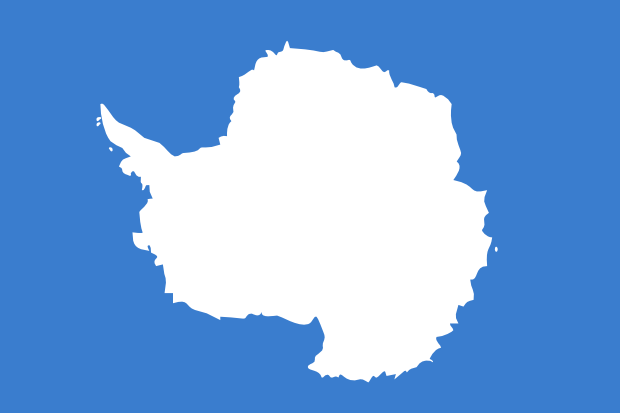
Country flag available in this resolutions
| Icon 32x21 |  |
| Icon 88x59 |  |
Antarctica
Antarctica: A Continent of Extremes
Antarctica, a continent shrouded in mystery and defined by its extreme environment, stands as a testament to Earths raw power and resilience. Located at the southernmost point of our planet, it is a land of unparalleled beauty and harsh realities, a continent unlike any other. Its vast, icy expanse covers approximately 14.2 million square kilometers, making it the fifth-largest continent. The sheer scale of Antarctica is difficult to comprehend; it is nearly twice the size of Australia and over 50 times larger than the United Kingdom. The continent is almost entirely covered by a massive ice sheet, which is the largest single mass of ice on Earth. This ice sheet holds about 90% of the worlds fresh water and, if it were to melt, would raise global sea levels by approximately 60 meters. The interior of Antarctica is a high, windswept plateau with an average elevation of over 2,000 meters, making it the highest continent. Beneath the ice, a complex geological landscape exists, including mountain ranges, volcanoes, and even liquid lakes, such as the renowned Lake Vostok. The coastline is a dramatic spectacle of towering ice cliffs and vast, frozen bays, often choked with sea ice for much of the year. The Antarctic Peninsula, extending northward towards South America, is the most accessible and relatively milder part of the continent, experiencing temperatures that can occasionally rise above freezing during the austral summer. However, even here, conditions remain incredibly challenging, with persistent winds and frequent blizzards being commonplace. The extreme cold is a defining characteristic; the lowest temperature ever recorded on Earth, -89.2 degrees Celsius, was registered at the Soviet Vostok Station in 1983.
The demography of Antarctica is, perhaps unsurprisingly, the most unique of any continent. Antarctica has no indigenous human population and no permanent residents in the traditional sense. Its human presence is almost entirely transient, consisting of scientists, researchers, and support staff who live and work at various research stations scattered across the continent. These stations are operated by numerous countries, each conducting vital scientific investigations into fields such as glaciology, meteorology, geology, biology, and astronomy. The population fluctuates significantly with the seasons. During the austral summer (October to February), the population can swell to several thousand individuals. However, during the harsh and dark austral winter (March to September), this number dwindles to a few hundred hardy souls who endure the extreme cold and isolation. These winter-over crews are a select group, possessing not only scientific expertise but also remarkable psychological fortitude. They are the guardians of the continent during its most challenging period. The concept of citizenship is irrelevant here; individuals are citizens of their respective home countries and are present in Antarctica under international agreements. The governance of the continent is managed through the Antarctic Treaty System, which designates Antarctica as a continent for peace and science, prohibiting military activity and promoting international cooperation.
Economically, Antarctica is largely off-limits to commercial exploitation, a principle enshrined in the Antarctic Treaty. The Protocol on Environmental Protection to the Antarctic Treaty, signed in 1991, further solidified this, designating Antarctica as a natural reserve, devoted to peace and science. This means that activities such as mining and resource extraction are prohibited. The primary economic activities are therefore scientific research, which is funded by national governments, and tourism. Antarctic tourism has grown significantly in recent decades, with cruise ships carrying thousands of visitors to the continent each year. These tours, while contributing to the economies of the countries operating them, are also subject to strict environmental regulations to minimize their impact on the fragile ecosystem. The economic value of Antarctica is not measured in traditional terms of resource extraction or industrial output, but rather in the invaluable scientific data and understanding it provides about our planets climate, geology, and history. The cost of maintaining research stations and conducting expeditions is substantial, representing a significant investment by participating nations in the pursuit of knowledge.
The history of Antarctica is a saga of exploration, endurance, and scientific endeavor. While indigenous peoples never inhabited the continent, the dream of a great southern land, Terra Australis Incognita, existed in ancient maps and legends. The first confirmed sighting of the Antarctic mainland is attributed to the Russian expedition led by Fabian Gottlieb von Bellingshausen and Mikhail Lazarev in 1820. However, it was the age of heroic exploration in the late 19th and early 20th centuries that truly etched Antarctica into human consciousness. Figures like Roald Amundsen, who famously reached the South Pole first in 1911, and Robert Falcon Scott, whose ill-fated expedition followed shortly after, became international icons. These expeditions, fraught with peril and pushing the limits of human endurance, were driven by a potent mix of national pride, scientific curiosity, and the sheer thrill of discovering the unknown. The establishment of permanent research stations began in the mid-20th century, marking a shift from purely exploratory endeavors to sustained scientific investigation. The signing of the Antarctic Treaty in 1959 was a pivotal moment, transforming the continent from a potential arena of geopolitical rivalry into a symbol of international cooperation. This treaty has ensured that Antarctica remains a continent dedicated to peace and scientific research, a remarkable achievement in a world often characterized by conflict. The ongoing scientific work continues to unlock the secrets of Antarctica, providing crucial insights into global climate change, the history of life on Earth, and the potential for life beyond our planet.
Information about country Antarctica
Automated text translation, excuse errors, please!
Informations are from the publication CIA The World Factbook.
Country Antarctica is situated in a location / continent Antarctica. The highest point has a height 4 897 above sea level. and it is called Vinson Massif. The lowest point is located at the level of -2540 above sea level and it is named Bentley Subglacial Trench. Antarctica has the international abbreviation AY.
Antarctica - economy
Antarctica - transport and telecommunications
Antarctica has 23 airports.
Antarctica have 7 763 Internet connections. Antarctica has been assigned a domain first Choose range .aq.
Antarctica - demography
Antarctica - energetics
.
Countries and flags
Rumunsko
Flags
Forbidden
You don't have permission to access /engine.php on this server.
Apache/2.2.15 (CentOS) Server at textlinks.net Port 80
Flags of the World countries
Dále doporučujeme:
Tipy na užitečné webyTipy na zajímavé weby
Zajímavé linky na nejrůznější weby
Zajímavé internetové odkazy
Odkazy na partnerské weby
 |
 |
 |
 |
 |
 |
 |
 |
 |
 |
 |
 |
 |
 |
 |
 |
 |
 |
 |