Bangladesh
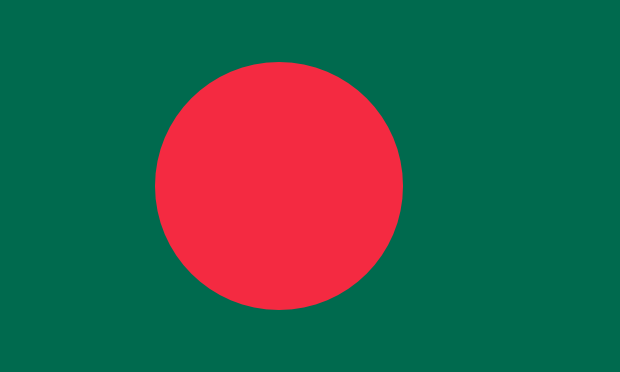
Country flag available in this resolutions
| Icon 32x19 |  |
| Icon 88x53 |  |
Bangladesh
Here’s an article about Bangladesh, approximately 3000 characters long, covering its demographics, economy, geography, and history, written in English with the specified formatting:
Bangladesh: A Nation Forged by Water and Resilience
Bangladesh, a nation nestled in the heart of the fertile Ganges Delta, is a land of breathtaking natural beauty and profound human resilience. Its geography, dominated by the mighty rivers that crisscross its landscape, has shaped its history, culture, and the very spirit of its people. From the bustling metropolises to the tranquil rural villages, Bangladesh is a tapestry woven with vibrant traditions, a burgeoning economy, and a population that has overcome immense challenges to forge a distinct national identity. The country’s official name, the People’s Republic of Bangladesh, reflects its democratic aspirations and its deep connection to its citizens.
The demographics of Bangladesh are characterized by a young and rapidly growing population. With over 160 million people, it is one of the most densely populated countries in the world. This demographic reality presents both opportunities and challenges. The young workforce is a significant asset for economic development, but it also necessitates substantial investment in education, healthcare, and job creation. The literacy rate has been steadily improving, a testament to the governments commitment to education, though disparities still exist between urban and rural areas and between genders. The majority of the population is Bengali, with a rich linguistic and cultural heritage. While Islam is the predominant religion, there is a significant Hindu minority, and smaller communities of Buddhists and Christians, contributing to a diverse religious landscape. Family structures are often traditional, with strong emphasis on community and kinship ties. The rapid urbanization has led to the growth of megacities like Dhaka, which grapple with issues of infrastructure, sanitation, and housing due to the sheer volume of people migrating from rural areas in search of better opportunities.
Bangladesh’s economy has undergone a remarkable transformation in recent decades. Once heavily reliant on agriculture, it has emerged as a global leader in the ready-made garment (RMG) industry, which has become the backbone of its export earnings. This sector employs millions, predominantly women, providing them with economic independence and contributing significantly to poverty reduction. Beyond garments, the country is diversifying its economy, with growing sectors in pharmaceuticals, shipbuilding, and information technology. Remittances from overseas workers also play a crucial role in bolstering the national income and supporting families back home. However, the economy still faces challenges. Vulnerability to natural disasters, including cyclones and floods, can disrupt economic activity and necessitate significant rebuilding efforts. Ensuring fair wages and safe working conditions in all sectors remains a priority. The government is actively pursuing policies to attract foreign investment, improve infrastructure, and foster innovation to sustain its growth trajectory. The development of the digital economy and the expansion of small and medium-sized enterprises (SMEs) are key strategies for future prosperity.
The geography of Bangladesh is inextricably linked to its identity. Situated on the vast delta formed by the Ganges, Brahmaputra, and Meghna rivers, the country is a low-lying alluvial plain, making it exceptionally fertile but also prone to flooding. The Sundarbans, the world’s largest mangrove forest, straddles the border with India and is a UNESCO World Heritage Site, renowned for its unique biodiversity, including the Bengal tiger. The monsoon season, while vital for agriculture, can also bring devastating floods and cyclones, posing a constant threat to life and property. This geographical reality has shaped the nation’s agricultural practices, its transportation networks (heavily reliant on waterways), and its disaster management strategies. The country’s location in South Asia, bordering India and Myanmar, also influences its geopolitical relationships and trade routes. The constant interplay between the land and the water defines the rhythm of life in Bangladesh, from the paddy fields that stretch to the horizon to the bustling river ports that are lifelines for commerce.
The history of Bangladesh is a saga of struggle, independence, and nation-building. For centuries, the region was part of larger empires and kingdoms. During British colonial rule, it was part of British India, and after partition in 1947, it became East Pakistan, separated from West Pakistan by over a thousand miles of Indian territory. The cultural and linguistic differences, coupled with political and economic marginalization, led to a growing demand for autonomy. This culminated in the Liberation War of 1971, a brutal conflict that resulted in the birth of an independent Bangladesh. The war, marked by immense sacrifice and loss, is a pivotal moment in the nation’s collective memory. Since independence, Bangladesh has navigated periods of political instability and natural calamities. However, the country has demonstrated remarkable resilience, consistently working towards democratic governance and socio-economic development. The legacy of the Liberation War continues to inspire national pride and a commitment to self-determination.
In conclusion, Bangladesh is a nation of immense potential, shaped by its dynamic geography, a youthful and energetic population, and a history of overcoming adversity. Its economic progress, particularly in the garment sector, has been a beacon of hope, and its ongoing efforts towards diversification and sustainable development promise a brighter future. The challenges of its dense population and vulnerability to climate change are significant, but the indomitable spirit of the Bangladeshi people, forged in the crucible of history and sustained by the rhythm of its mighty rivers, continues to propel this vibrant nation forward.
Information about country Bangladesh
Automated text translation, excuse errors, please!
Informations are from the publication CIA The World Factbook.
Country Bangladesh is situated in a location / continent South Asia. Bangladesh has an area of 143 998 km2 and 161 083 804 residents. The highest point has a height 1 230 above sea level. and it is called Keokradong. The lowest point is located at the level of 0 above sea level and it is named Indian Ocean. System of government is republic and the date of independence 16th December 1971. The capital city is Dhaka. Bangladesh has the international abbreviation BG.
Bangladesh - economy
Total gross domestic product (GDP) is 285 800 000 000 $. Total gross domestic product per capita in purchasing power parity is 1 700 $. GDP grows by 6.10 % a year. Inflation (consumer price index) is equal to 10.70 % a year. Bangladesh have 75 420 000 working-age population (from a total population 161 083 804 people). Unemployment is at 5.00 %. Bangladesh issued 3.40 % GDP to healt care and 1,30 % GDP to army. The public debt of the country is 35.20 % GDP. The total amount of foreign debt is 25 220 000 000 USD.
Bangladesh - transport and telecommunications
Bangladesh has 239 226 km of roads, 2 622 km of railway lines and 18 airports. The total length of waterways (navigable rivers, canals, etc.) is 8 370 km. There is registered 62 ships.
Number of active mobile phones (sim card) in the country Bangladesh is 85 000 000. Number of active fixed telephone lines is 1 600 000. Bangladesh has 617 300 internet users, who have the available 69 285 Internet connections. Bangladesh has been assigned a domain first Choose range .bd.
Bangladesh - demography
As suggested above, Bangladesh has 161 083 804 people. Population growth is in the amount 1.58 % per year. Number of children born per 1000 population per year is 22.53.Every mother has average 2.55 children. The infant mortality rate is 48.99 and maternal mortality 240.00 deaths per 100,000 births. Average estimated life expectancy makes 70.06 years. Mortality is 5.71 people per 1000 population per year.
Bangladesh - energetics
Bangladesh consumes a year 34 830 000 000 kWh of electricity. Annual electricity production is 35 700 000 000 kWh in power plants with a total installed electrical capacity 5 819 000 kW. Bangladesh exports 0 kWh and imports 0 kWh of electricity per year Energy mix of power generation is as follows: fossil fuels: 95.8 %, nuclear energy: 0 %, renewable: 0.3 %, hydropower: 4.0 %. The country Bangladesh is harvested annually 5 200 barrels of oil.
Countries and flags
Brunej
Flags
Flags of the World countries
Dále doporučujeme:
Naše tipy na zajímavé stránkyDoporučené internetové odkazy
Tipy na užitečné weby
Tipy na Partnerské weby
Odkazy nejen na naše partnerské weby
 |
 |
 |
 |
 |
 |
 |
 |
 |
 |
 |
 |
 |
 |
 |
 |
 |
 |
 |