Antigua and Barbuda
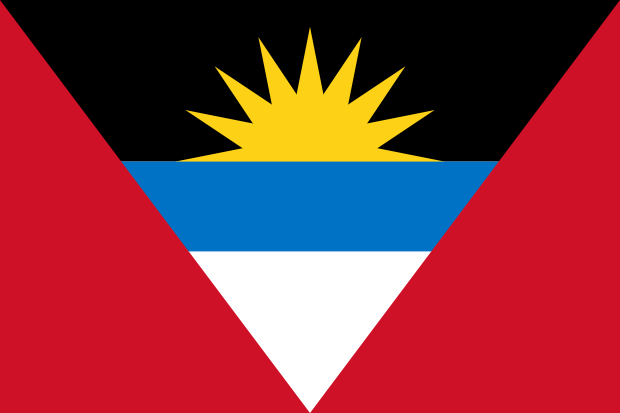
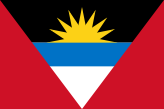
Country flag available in this resolutions
| Icon 32x21 |  |
| Icon 88x59 |  |
Antigua and Barbuda
The twin-island nation of Antigua and Barbuda, nestled in the heart of the Lesser Antilles, presents a captivating tapestry of natural beauty, rich history, and a vibrant, albeit somewhat fragile, economy. Comprising two primary islands and a scattering of smaller islets, this Caribbean gem offers a unique blend of colonial heritage and tropical allure. Its geographical position, a mere 200 miles north of Guadeloupe and 24 miles east of Saint Kitts and Nevis, places it strategically within the eastern Caribbean archipelago, blessed with a warm, tropical climate and an abundance of sunshine, making it a perennial favorite for tourists seeking paradise.
The demographic landscape of Antigua and Barbuda is largely shaped by its colonial past and its subsequent independence. The population, estimated to be around 97,000 people, is predominantly of African descent, a direct legacy of the transatlantic slave trade that fueled the islands’ historical sugar plantations. This rich African heritage is evident in the cultural expressions, music, and traditions that permeate daily life. A significant portion of the population also possesses European ancestry, particularly British, due to centuries of colonial rule. English is the official language, a testament to its British colonial past, though a local English-based Creole, known as Antiguan Creole, is widely spoken in informal settings, adding a distinct flavor to everyday communication. Christianity is the dominant religion, with the Anglican Church holding the largest following, but other denominations, including Protestant and Catholic churches, are also present, reflecting a diverse religious landscape. The population is relatively young, with a median age of around 30 years, contributing to a dynamic and energetic society. Urbanization is concentrated in and around the capital city, St. John’s, on Antigua, which serves as the administrative, commercial, and cultural hub of the nation. Barbuda, in contrast, remains sparsely populated, retaining a more tranquil and less developed character, with its inhabitants largely clustered in the single village of Codrington.
Economically, Antigua and Barbudas fortunes have been inextricably linked to tourism. The islands boast over 365 beaches, each purportedly offering a unique swimming experience for every day of the year, a claim that underscores the nations immense natural appeal to international visitors. The hospitality sector is the backbone of the economy, providing employment for a substantial percentage of the workforce and generating the majority of the countrys foreign exchange earnings. From luxury resorts and boutique hotels to cruise ship terminals, the infrastructure is geared towards catering to the needs and desires of tourists. Beyond tourism, other sectors contribute to the economic output, albeit to a lesser extent. Agriculture, though diminished from its historical prominence, still plays a role, with crops such as sugarcane, yams, and mangoes being cultivated. Fishing is another important activity, providing a source of sustenance and income for coastal communities. The government has also been actively seeking to diversify the economy, exploring opportunities in areas such as offshore financial services and light manufacturing, though these sectors are still in their nascent stages of development. However, the heavy reliance on tourism renders the economy vulnerable to external shocks, such as global economic downturns, natural disasters like hurricanes, and shifts in travel trends. The nation’s fiscal health is often a delicate balancing act, with efforts to manage public debt while investing in essential infrastructure and social services.
The geography of Antigua and Barbuda is characterized by its low-lying coral limestone terrain, which contrasts with the more mountainous volcanic islands found elsewhere in the Caribbean. Antigua, the larger and more populous island, is fringed by coral reefs and boasts a deeply indented coastline with numerous natural harbors, the most significant being St. John’s Harbour. The islands interior is relatively flat, with rolling hills and fertile valleys. Barbuda, located about 30 miles north of Antigua, is even flatter and less developed, known for its pristine beaches, extensive coral reefs, and significant bird populations, including the magnificent frigatebird. The climate is tropical marine, with consistently warm temperatures year-round, moderated by sea breezes. The wet season typically runs from July to November, while the dry season extends from December to June. The islands are susceptible to hurricanes during the Atlantic hurricane season, which runs from June to November, posing a significant threat to both life and property, as tragically demonstrated by the devastation wrought by Hurricane Irma in 2017, which severely impacted Barbuda. The natural environment, with its vibrant coral reefs, diverse marine life, and lush vegetation, is a major draw for ecotourism, and conservation efforts are increasingly recognized as crucial for the long-term sustainability of the islands natural assets.
The history of Antigua and Barbuda is a narrative woven from threads of indigenous habitation, colonial conquest, and the struggle for independence. The islands were originally inhabited by the indigenous Ciboney people, followed by the Arawak and then the Carib peoples, who were the dominant inhabitants when Europeans first arrived. Christopher Columbus landed on Antigua in 1493, claiming it for Spain, though the Spanish did not establish permanent settlements. English colonization began in 1632, with Antigua becoming a significant sugar-producing colony under British rule. The economy was heavily reliant on enslaved African labor to work the sugar plantations, a brutal and inhumane system that left a profound and lasting impact on the social fabric of the islands. The abolition of slavery in 1834 marked a turning point, but the legacy of plantation life continued to shape social and economic structures for generations. Antigua and Barbuda gained full independence from the United Kingdom on November 1, 1981, becoming a sovereign nation within the Commonwealth. The political system is a parliamentary democracy, with a bicameral legislature and a prime minister as the head of government. The nation has strived to establish its place on the international stage, participating in regional organizations and advocating for issues such as climate change and sustainable development. The historical narrative of Antigua and Barbuda is one of resilience and adaptation, from the indigenous peoples to the enslaved Africans and their descendants, all contributing to the unique cultural identity of this Caribbean nation.
Information about country Antigua and Barbuda
Automated text translation, excuse errors, please!
Informations are from the publication CIA The World Factbook.
Country Antigua and Barbuda is situated in a location / continent Central America. Antigua and Barbuda has an area of 443 km2 and 89 018 residents. The highest point has a height 402 above sea level. and it is called Boggy Peak. The lowest point is located at the level of 0 above sea level and it is named Caribbean Sea. System of government is constitutional monarchy, Commonwealth member country and the date of independence First November 1981. The capital city is Saint John je. Antigua and Barbuda has the international abbreviation AC.
Antigua and Barbuda - economy
Total gross domestic product (GDP) is 1 595 000 000 $. Total gross domestic product per capita in purchasing power parity is 18 200 $. GDP grows by -0.50 % a year. Inflation (consumer price index) is equal to 3.30 % a year. Antigua and Barbuda have 30 000 working-age population (from a total population 89 018 people). Unemployment is at 11.00 %. Antigua and Barbuda issued 5.10 % GDP to healt care .The total amount of foreign debt is 359 800 000 USD.
Antigua and Barbuda - transport and telecommunications
Antigua and Barbuda has 1 165 km of roads and 3 airports. There is registered 1 257 ships.
Number of active mobile phones (sim card) in the country Antigua and Barbuda is 162 800. Number of active fixed telephone lines is 35 500. Antigua and Barbuda has 65 000 internet users, who have the available 11 844 Internet connections. Antigua and Barbuda has been assigned a domain first Choose range .ag.
Antigua and Barbuda - demography
As suggested above, Antigua and Barbuda has 89 018 people. Population growth is in the amount 1.28 % per year. Number of children born per 1000 population per year is 16.19.Every mother has average 2.05 children. The infant mortality rate is 14.17 .Average estimated life expectancy makes 75.69 years. Mortality is 5.72 people per 1000 population per year.
Antigua and Barbuda - energetics
Antigua and Barbuda consumes a year 107 000 000 kWh of electricity. Annual electricity production is 115 000 000 kWh in power plants with a total installed electrical capacity 27 000 kW. Antigua and Barbuda exports 0 kWh and imports 0 kWh of electricity per year Energy mix of power generation is as follows: fossil fuels: 100 %, nuclear energy: 0 %, renewable: 0.0 %, hydropower: 0.0 %.
Countries and flags
Mozambik
Flags
Flags of the World countries
Dále doporučujeme:
Zajímavé webové stránkyDoporučené internetové odkazy
Naše tipy na užitečné weby
Partnerské internetové stránky
Doporučené odkazy
 |
 |
 |
 |
 |
 |
 |
 |
 |
 |
 |
 |
 |
 |
 |
 |
 |
 |
 |