Austria
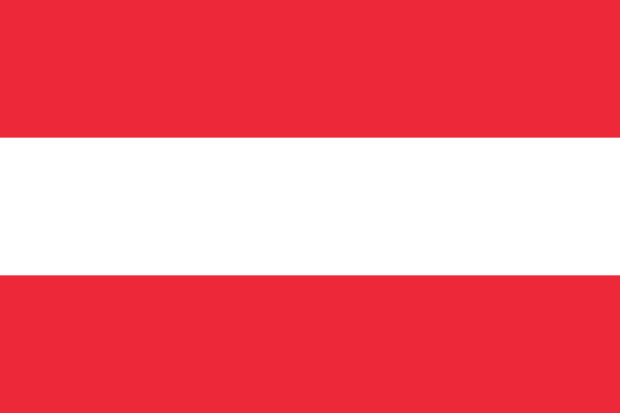
Country flag available in this resolutions
| Icon 32x21 |  |
| Icon 88x59 |  |
Austria
Here is an article about Austria, approximately 3000 characters long, written in English, using Czech quotation marks „“ and bold text with `` tags.
Austria, officially the Republic of Austria, is a landlocked country situated in the heart of Europe, a geographical position that has profoundly shaped its history, culture, and economic development. Its diverse landscape, ranging from the majestic Alps in the west to the rolling hills and plains in the east, offers a dramatic and picturesque setting for its vibrant society. This Central European nation, with its rich tapestry of traditions and a forward-looking economy, presents a compelling case study of a modern European state with deep historical roots.
The demographics of Austria paint a picture of a relatively homogeneous population with a high standard of living. As of recent estimates, Austrias population hovers around 9 million people. The majority of the population identifies as ethnically Austrian, with German being the official and most widely spoken language. However, due to its historical position as a crossroads of empires and its ongoing role in international affairs, Austria also hosts significant minority groups, including Slovenes, Croats, Hungarians, and Czechs, particularly in border regions. Vienna, the capital city, is the most populous urban center, serving as a major hub for culture, politics, and commerce, and attracting a substantial international population. The age structure of Austria, like many developed European nations, is characterized by an aging population and a relatively low birth rate, necessitating careful consideration of social welfare systems and future labor market needs. The country boasts a high life expectancy and a well-developed healthcare system, contributing to the overall quality of life for its citizens. Urbanization is a significant trend, with a large proportion of the population residing in cities and towns, while rural areas, though less populated, retain their unique charm and cultural significance.
Austria’s economy is a highly developed, social market economy, characterized by a strong industrial base, a robust service sector, and a commitment to innovation and sustainability. It is a member of the European Union and the Eurozone, which has further integrated its economy into the broader European market. Key sectors include manufacturing, particularly in machinery, automotive components, and chemicals, as well as a thriving tourism industry, drawn by its stunning natural beauty and rich cultural heritage. Vienna’s role as an international hub also contributes significantly to its economic strength, hosting numerous international organizations and fostering a dynamic business environment. The unemployment rate in Austria is generally low compared to the European average, reflecting a resilient labor market and a skilled workforce. The country places a strong emphasis on vocational training and lifelong learning, ensuring that its workforce remains competitive in a globalized economy. Furthermore, Austria has made significant strides in renewable energy, particularly in hydropower, and is actively pursuing sustainable economic practices, aligning with global environmental goals. The export-oriented nature of its economy makes it sensitive to global economic fluctuations, but its diversified industrial base and strong trading partnerships provide a degree of stability.
The geography of Austria is one of its most defining characteristics, with the Alps dominating the western and central parts of the country. These towering mountains provide breathtaking scenery, abundant opportunities for winter sports, and are a major draw for tourists. Major mountain ranges include the Rätikon, Silvretta, Ötztal Alps, Stubai Alps, Zillertal Alps, Hohe Tauern, and Niedere Tauern. The highest peak is the Grossglockner, standing at 3,798 meters. Rivers like the Danube, which flows through the eastern part of the country, are vital for transportation and energy generation. The eastern regions, including the capital Vienna, are characterized by rolling hills, fertile plains, and the Pannonian Basin, offering a contrast to the mountainous west. Austria shares borders with eight other European countries: Germany and the Czech Republic to the north, Slovakia and Hungary to the east, Slovenia and Italy to the south, and Switzerland and Liechtenstein to the west. This central location has historically made it a strategic point for trade and cultural exchange, but also a frequent battleground for competing powers. The countrys diverse climate ranges from alpine conditions in the mountains to a more continental climate in the east, with distinct seasons that influence both its natural landscape and its economic activities, such as agriculture and tourism.
Austria’s history is a long and complex narrative, deeply intertwined with the rise and fall of empires and the ebb and flow of European power dynamics. Its origins can be traced back to the Duchy of Austria, established in the 10th century. The Habsburg dynasty, which came to power in the 13th century, would go on to shape Austria’s destiny for over six centuries, transforming it from a modest duchy into a vast and influential empire. The Austro-Hungarian Empire, at its zenith, was a multi-ethnic conglomerate that spanned a significant portion of Central and Eastern Europe, leaving an indelible mark on the regions cultural and political landscape. Vienna, as its capital, became a center of art, music, and intellectual thought, nurturing figures like Mozart, Beethoven, Freud, and Klimt. The empire’s decline in the 19th century, fueled by rising nationalism, eventually led to its dissolution after World War I. The subsequent First Austrian Republic faced significant political and economic turmoil, culminating in the Anschluss with Nazi Germany in 1938. Following World War II, Austria was occupied by the Allied powers and re-established as an independent republic in 1955, adopting a policy of permanent neutrality. Since then, Austria has emerged as a stable democracy, a prosperous nation, and an active participant in international affairs, joining the European Union in 1995. The legacy of its imperial past is still evident in its architecture, its cultural institutions, and its deeply ingrained sense of identity.
Culturally, Austria is renowned for its rich artistic heritage, particularly in classical music. Composers like Haydn, Mozart, Beethoven, Schubert, Brahms, and Strauss all have strong ties to Austria, and Vienna remains a world-renowned center for musical performance and education. The country’s imperial past has left a legacy of magnificent palaces, grand architecture, and a refined appreciation for the arts. Traditional Austrian cuisine, often hearty and influenced by its neighboring countries, is another significant cultural element, with dishes like Wiener Schnitzel, Sachertorte, and Apfelstrudel gaining international recognition. The strong emphasis on tradition is balanced with a modern, progressive outlook, making Austria a fascinating blend of old and new. The concept of „Gemütlichkeit“ – a feeling of warmth, coziness, and convivial sociability – is deeply embedded in Austrian culture, reflecting a desire for comfort and well-being. This cultural richness, combined with its stunning natural beauty and its strategic location, makes Austria a country of enduring appeal and significance on the European stage.
Information about country Austria
Automated text translation, excuse errors, please!
Informations are from the publication CIA The World Factbook.
Country Austria is situated in a location / continent Europe. Austria has an area of 83 871 km2 and 8 219 743 residents. The highest point has a height 3 798 above sea level. and it is called Grossglockner. The lowest point is located at the level of 115 above sea level and it is named Neusiedler See. System of government is Federal Republic and the date of independence 12th November 1918. The capital city is Vienna. Austria has the international abbreviation AU.
Austria - economy
Total gross domestic product (GDP) is 356 500 000 000 $. Total gross domestic product per capita in purchasing power parity is 42 400 $. GDP grows by 3.10 % a year. Inflation (consumer price index) is equal to 3.50 % a year. Austria have 3 668 000 working-age population (from a total population 8 219 743 people). Unemployment is at 4.20 %. Austria issued 11.00 % GDP to healt care and 0,80 % GDP to army. The public debt of the country is 73.60 % GDP. The total amount of foreign debt is 883 500 000 000 USD.
Austria - transport and telecommunications
Austria has 110 778 km of roads, 6 399 km of railway lines and 52 airports. The total length of waterways (navigable rivers, canals, etc.) is 358 km. There is registered 3 ships.
Number of active mobile phones (sim card) in the country Austria is 13 023 000. Number of active fixed telephone lines is 3 388 000. Austria has 6 143 000 internet users, who have the available 3 445 000 Internet connections. Austria has been assigned a domain first Choose range .at.
Austria - demography
As suggested above, Austria has 8 219 743 people. Population growth is in the amount 0.03 % per year. Number of children born per 1000 population per year is 8.69.Every mother has average 1.41 children. The infant mortality rate is 4.26 and maternal mortality 4.00 deaths per 100,000 births. Average estimated life expectancy makes 79.91 years. Mortality is 10.23 people per 1000 population per year.
Austria - energetics
Austria consumes a year 61 510 000 000 kWh of electricity. Annual electricity production is 63 980 000 000 kWh in power plants with a total installed electrical capacity 20 850 000 kW. Austria exports 17 530 000 000 kWh and imports 19 750 000 000 kWh of electricity per year Energy mix of power generation is as follows: fossil fuels: 19.6 %, nuclear energy: 0 %, renewable: 20.4 %, hydropower: 38.7 %. The country Austria is harvested annually 25 750 barrels of oil.
Countries and flags
Jemen
Flags
Flags of the World countries
Dále doporučujeme:
Partnerské internetové stránkyDoporučené internetové odkazy
Zajímavé webové stránky
Tipy na užitečné weby
Odkazy na partnerské weby
 |
 |
 |
 |
 |
 |
 |
 |
 |
 |
 |
 |
 |
 |
 |
 |
 |
 |
 |