Aruba
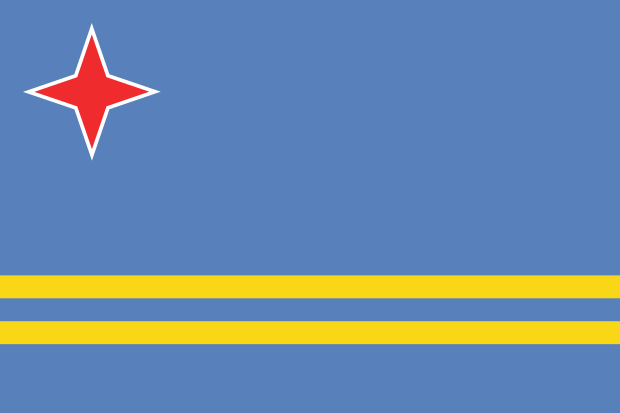
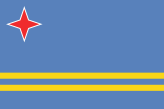
Country flag available in this resolutions
| Icon 32x21 |  |
| Icon 88x59 |  |
Aruba
Aruba: The Happy Island’s Enduring Charm
Nestled in the southern Caribbean Sea, just off the coast of Venezuela, Aruba stands as a beacon of sunshine, pristine beaches, and a vibrant, multicultural spirit. Known affectionately as “One Happy Island,” this Dutch Caribbean gem captivates visitors with its unique blend of natural beauty, rich history, and a thriving economy. Covering a mere 193 square kilometers, Aruba punches well above its weight in terms of its allure and significance. Its geographical location has played a pivotal role in shaping its destiny, from its indigenous roots to its modern-day status as a premier tourist destination. The island’s arid landscape, a stark contrast to the lush rainforests of other Caribbean islands, is characterized by rolling hills, dramatic rock formations like Ayo and Casibari, and the iconic divi-divi trees, perpetually bent by the prevailing trade winds. This unique environment, while challenging, has fostered a resilient and resourceful population.
The demographic tapestry of Aruba is as colorful and diverse as its coral reefs. With a population of approximately 107,000 people, Arubans are a proud testament to the island’s history as a crossroads of cultures. While the indigenous Caiquetio people were the original inhabitants, centuries of exploration, trade, and migration have woven a rich genetic and cultural heritage. Today, the vast majority of Arubans have mixed ancestry, with significant influences from Dutch, Spanish, African, and various other European and South American backgrounds. This fusion is evident in the island’s languages, with Papiamento, a creole language blending Dutch, Spanish, Portuguese, and African tongues, being the national language. English and Spanish are also widely spoken and understood, reflecting the island’s strong ties to international trade and tourism. This linguistic diversity fosters an open and welcoming atmosphere, making visitors feel at home from the moment they arrive. The Aruban society is characterized by its strong sense of community, its emphasis on family values, and its generally relaxed yet industrious approach to life. Festivals, music, and dance are integral to the Aruban way of life, providing vibrant expressions of their cultural identity.
Aruba’s economy is overwhelmingly driven by tourism, a sector that has been meticulously cultivated and sustained over decades. The island’s consistent sunshine, beautiful beaches, and safe environment attract millions of visitors annually, primarily from North America and Europe. The hospitality industry is the bedrock of its prosperity, encompassing a wide array of world-class hotels, resorts, casinos, restaurants, and tour operators. Beyond direct tourism revenue, the sector generates employment in related fields such as transportation, retail, and entertainment. However, recognizing the inherent risks of over-reliance on a single industry, Aruba has also strategically diversified its economy. The island boasts a significant offshore financial services sector, attracting international businesses due to its stable political environment and favorable tax regulations. Furthermore, the local economy benefits from industries such as oil refining, though this sector has seen fluctuations in recent years. The government actively invests in infrastructure development, ensuring that the island remains attractive to both tourists and investors, with modern airports, well-maintained roads, and reliable utilities. The pursuit of sustainable tourism practices is also becoming increasingly important, with initiatives aimed at preserving the island’s natural beauty and cultural heritage for future generations.
The history of Aruba is a captivating narrative of indigenous resilience, colonial ambition, and eventual self-governance. Originally inhabited by the Caiquetio people of the Arawak nation, the island was discovered by the Spanish explorer Alonso de Ojeda in 1499. The Spanish, however, found little of interest in Aruba, deeming it isla inútil or useless island due to its arid climate and lack of precious metals. They deported most of the indigenous population to work in mines in Hispaniola. In 1636, the Dutch took possession of Aruba, marking the beginning of Dutch colonial rule. Under Dutch administration, Aruba developed into a modest agricultural center and a trading post. The discovery of oil in the early 20th century, however, dramatically transformed the island’s economic landscape. The establishment of an oil refinery, Lago Oil and Transport Company, brought significant economic growth and a surge in population, attracting workers from various parts of the world. This period also witnessed the rise of a distinct Aruban identity, forged through the interaction of diverse cultures. In 1954, Aruba gained a degree of autonomy within the Kingdom of the Netherlands, and in 1986, it achieved the status of a self-governing country within the Kingdom, with the Netherlands retaining responsibility for defense and foreign affairs. This evolution reflects a careful balance between maintaining strong ties with the Netherlands and asserting its own national sovereignty.
Geographically, Aruba’s position in the southern Caribbean is a defining characteristic. Located at approximately 12.5 degrees north latitude and 70 degrees west longitude, it is part of the Leeward Antilles, a chain of islands that lie outside the hurricane belt. This fortunate geographical placement contributes significantly to its appeal as a year-round tourist destination, offering a consistently pleasant climate with average temperatures around 28 degrees Celsius (82 degrees Fahrenheit) and gentle trade winds. The island’s topography is predominantly flat, with the highest point being Mount Jamanota at 188 meters. Its coastline is fringed with stunning white-sand beaches, particularly on the western and southern sides, such as Eagle Beach and Palm Beach, which are world-renowned for their beauty and calm waters. The northern and eastern coasts, in contrast, are more rugged and exposed to the open sea, featuring dramatic cliffs and rock formations, offering a different kind of natural spectacle. The lack of significant freshwater sources has historically presented challenges, leading to the development of sophisticated desalination plants, which are now essential for the island’s water supply. The arid environment supports a unique flora and fauna, including cacti, iguanas, and a variety of bird species, contributing to the island’s distinctive natural charm.
In conclusion, Aruba is far more than just a tropical paradise; it is a vibrant and resilient island nation with a rich history, a diverse population, and a dynamic economy. Its geographical advantages have been skillfully leveraged to build a thriving tourism industry, while a strategic approach to diversification has ensured its economic stability. The islands unique cultural heritage, a beautiful mosaic of indigenous, European, and African influences, is celebrated and shared with visitors, making Aruba truly deserving of its moniker, “One Happy Island.” From its sun-drenched beaches to its welcoming people, Aruba continues to enchant and inspire, offering an unforgettable experience to all who set foot on its shores.
Information about country Aruba
Automated text translation, excuse errors, please!
Informations are from the publication CIA The World Factbook.
Country Aruba is situated in a location / continent Central America. Aruba has an area of 180 km2 and 107 635 residents. The highest point has a height 188 above sea level. and it is called Mount Jamanota. The lowest point is located at the level of 0 above sea level and it is named Caribbean Sea. System of government is republic.The capital city is Oranjestad. Aruba has the international abbreviation AA.
Aruba - economy
Total gross domestic product (GDP) is 2 258 000 000 $. Total gross domestic product per capita in purchasing power parity is 21 800 $. GDP grows by 2.40 % a year. Inflation (consumer price index) is equal to 4.40 % a year. Aruba have 41 500 working-age population (from a total population 107 635 people). Unemployment is at 6.90 %. The public debt of the country is 46.30 % GDP. The total amount of foreign debt is 478 600 000 USD.
Aruba - transport and telecommunications
Aruba has 1 airports.
Number of active mobile phones (sim card) in the country Aruba is 131 800. Number of active fixed telephone lines is 35 000. Aruba has 24 000 internet users, who have the available 40 894 Internet connections. Aruba has been assigned a domain first Choose range .aw.
Aruba - demography
As suggested above, Aruba has 107 635 people. Population growth is in the amount 1.41 % per year. Number of children born per 1000 population per year is 12.76.Every mother has average 1.84 children. The infant mortality rate is 12.51 .Average estimated life expectancy makes 75.93 years. Mortality is 7.92 people per 1000 population per year.
Aruba - energetics
Aruba consumes a year 818 400 000 kWh of electricity. Annual electricity production is 880 000 000 kWh in power plants with a total installed electrical capacity 266 000 kW. Aruba exports 0 kWh and imports 0 kWh of electricity per year Energy mix of power generation is as follows: fossil fuels: 88.7 %, nuclear energy: 0 %, renewable: 11.3 %, hydropower: 0.0 %.
Countries and flags
Lotyšsko
Flags
Flags of the World countries
Dále doporučujeme:
Tipy na zajímavé webyZajímavé webové stránky
Naše tipy na zajímavé stránky
Zajímavé linky na nejrůznější weby
Tipy na Partnerské weby
 |
 |
 |
 |
 |
 |
 |
 |
 |
 |
 |
 |
 |
 |
 |
 |
 |
 |
 |