Armenia
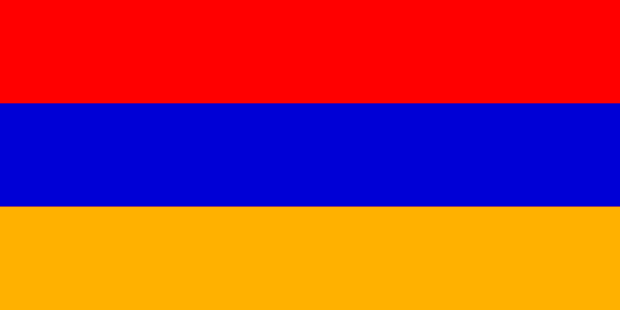
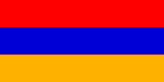
Country flag available in this resolutions
| Icon 32x16 |  |
| Icon 88x44 |  |
Armenia
Heres an article about Armenia, approximately 3000 characters long, written in English with the specified formatting:
Armenia: A Land of Ancient Roots and Modern Aspirations
Armenia, nestled in the highlands of the South Caucasus, is a land steeped in history, culture, and breathtaking natural beauty. Often referred to as the “cradle of civilization,” its ancient roots stretch back millennia, marked by a rich tapestry of traditions, art, and a profound spiritual heritage. This landlocked nation, bordered by Turkey, Georgia, Azerbaijan, and Iran, possesses a unique geopolitical position that has shaped its destiny for centuries. Its rugged terrain, characterized by towering mountains, fertile valleys, and the shimmering expanse of Lake Sevan, forms a dramatic backdrop to its enduring story. Armenia’s identity is inextricably linked to its enduring Christian faith, having been the first nation in the world to adopt Christianity as its state religion in 301 AD. This profound historical fact has profoundly influenced its architecture, its art, and the very soul of its people.
The demographic landscape of Armenia reflects both its ancient heritage and the challenges of its modern era. With an estimated population of around 2.9 million people, the nation has experienced periods of significant emigration, particularly in the post-Soviet era, as citizens sought economic opportunities abroad. However, there is also a strong sense of national pride and a growing diaspora that actively supports its homeland. The Armenian population is largely homogeneous, with ethnic Armenians forming the vast majority. The Armenian Apostolic Church plays a central role in the cultural and social fabric of the country, with its ancient monasteries and churches dotting the landscape, serving as testaments to centuries of faith and architectural prowess. Yerevan, the capital and largest city, is a vibrant hub of activity, blending Soviet-era architecture with modern developments, and is home to a significant portion of the nation’s urban population. The demographic trends are influenced by factors such as birth rates, life expectancy, and the ongoing movement of people, both within the country and internationally.
Economically, Armenia has been on a journey of transformation since gaining independence from the Soviet Union. The nation has transitioned to a market economy, with a focus on developing key sectors such as mining, information technology, and tourism. The rich mineral resources of the country, including copper, gold, and molybdenum, have historically been a significant contributor to its economy. In recent decades, Armenia has also emerged as a growing player in the global IT sector, with a burgeoning tech industry and a skilled workforce. Tourism is another area of increasing importance, attracting visitors with its ancient historical sites, stunning natural landscapes, and unique cultural experiences. However, Armenia faces economic challenges, including a reliance on remittances from its diaspora, limited natural resources, and regional geopolitical complexities that can impact trade and investment. The government is actively working to diversify the economy, attract foreign investment, and improve the business environment to foster sustainable growth and create new opportunities for its citizens.
The geography of Armenia is as captivating as its history. Situated in the Armenian Highlands, the country is characterized by a mountainous terrain, with the highest peak being Mount Aragats. The landscape is punctuated by deep gorges, volcanic plateaus, and fertile river valleys. The iconic Lake Sevan, one of the largest high-altitude freshwater lakes in the world, is a jewel of the Armenian landscape, providing vital water resources and a stunning natural setting. The climate varies across the country, with continental influences leading to hot summers and cold, snowy winters in the highlands, while lower-lying areas experience milder temperatures. This diverse geography has historically influenced settlement patterns, agricultural practices, and the development of distinct regional cultures within Armenia. The country’s strategic location, while contributing to its rich history, has also presented challenges, with its landlocked nature impacting trade routes and its proximity to volatile regions.
Armenia’s history is a saga of resilience, innovation, and a deep-seated cultural identity. From the ancient Urartian kingdom to the medieval Armenian kingdoms that flourished with their own script and literature, Armenia has a proud and unbroken lineage. The adoption of Christianity in the 4th century marked a pivotal moment, shaping its spiritual and cultural development for millennia. Armenia has experienced periods of great power and influence, as well as periods of subjugation under various empires, including the Persian, Roman, Byzantine, Arab, Mongol, Ottoman, and Russian empires. The Armenian Genocide, a tragic event in the early 20th century, remains a deeply painful chapter in its history, a stark reminder of the nation’s struggle for survival and recognition. Despite these adversities, the Armenian people have consistently demonstrated an extraordinary capacity to preserve their language, culture, and national identity. The establishment of the First Republic of Armenia in 1918, followed by its incorporation into the Soviet Union, and finally its independence in 1991, represent key milestones in its modern history. The ongoing pursuit of recognition for the Armenian Genocide and the resolution of the Nagorno-Karabakh conflict remain significant contemporary issues that continue to shape the nation’s present and future aspirations.
Information about country Armenia
Automated text translation, excuse errors, please!
Informations are from the publication CIA The World Factbook.
Country Armenia is situated in a location / continent Middle East. Armenia has an area of 29 743 km2 and 2 970 495 residents. The highest point has a height 4 090 above sea level.. The lowest point is located at the level of 400 above sea level and it is named Debed River. System of government is republic.The capital city is Yerevan. Armenia has the international abbreviation AM.
Armenia - economy
Total gross domestic product (GDP) is 18 170 000 000 $. Total gross domestic product per capita in purchasing power parity is 5 500 $. GDP grows by 4.40 % a year. Inflation (consumer price index) is equal to 7.70 % a year. Armenia have 1 194 000 working-age population (from a total population 2 970 495 people). Unemployment is at 5.90 %. Armenia issued 4.70 % GDP to healt care and 2,80 % GDP to army. The public debt of the country is 38.60 % GDP. The total amount of foreign debt is 7 336 000 000 USD.
Armenia - transport and telecommunications
Armenia has 8 888 km of roads, 869 km of railway lines and 11 airports.
Number of active mobile phones (sim card) in the country Armenia is 3 211 000. Number of active fixed telephone lines is 577 500. Armenia has 208 200 internet users, who have the available 192 541 Internet connections. Armenia has been assigned a domain first Choose range .am.
Armenia - demography
As suggested above, Armenia has 2 970 495 people. Population growth is in the amount 0.11 % per year. Number of children born per 1000 population per year is 12.90.Every mother has average 1.38 children. The infant mortality rate is 18.21 and maternal mortality 30.00 deaths per 100,000 births. Average estimated life expectancy makes 73.49 years. Mortality is 8.49 people per 1000 population per year.
Armenia - energetics
Armenia consumes a year 5 800 000 000 kWh of electricity. Annual electricity production is 7 432 000 000 kWh in power plants with a total installed electrical capacity 3 173 000 kW. Armenia exports 1 360 000 000 kWh and imports 291 000 000 kWh of electricity per year Energy mix of power generation is as follows: fossil fuels: 53.3 %, nuclear energy: 11.8 %, renewable: 0.1 %, hydropower: 34.7 %.
Countries and flags
Maroko
Flags
Flags of the World countries
Dále doporučujeme:
Doporučené odkazyOdkazy na užitečné webové stránky
Partnerské internetové stránky
Zajímavé internetové odkazy
Tipy na užitečné weby
 |
 |
 |
 |
 |
 |
 |
 |
 |
 |
 |
 |
 |
 |
 |
 |
 |
 |
 |