Angola
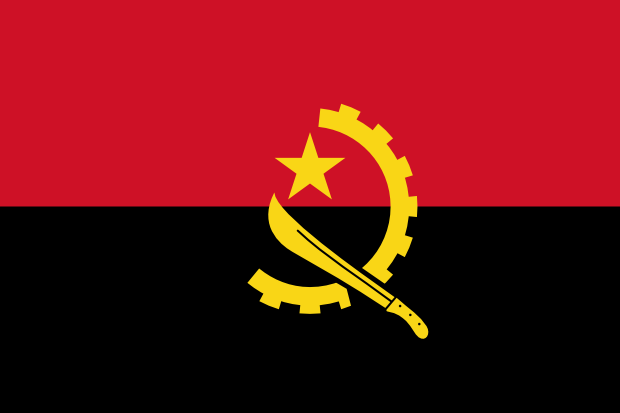
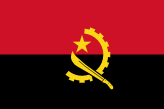
Country flag available in this resolutions
| Icon 32x21 |  |
| Icon 88x59 |  |
Angola
Angola: A Land of Rich Resources and Complex History
Angola, officially the Republic of Angola, is a vast and geographically diverse nation located on the western coast of Southern Africa. Bordered by Namibia to the south, Zambia to the east, the Democratic Republic of Congo to the northeast, and the Atlantic Ocean to the west, Angola possesses a strategic position and a rich tapestry of natural resources. Its territorial expanse is considerable, encompassing an area of approximately 1,246,700 square kilometers, making it the seventh-largest country in Africa. The countrys geography is characterized by a striking variety of landscapes. Along the coast, a narrow, arid plain stretches inland, gradually giving way to a vast plateau that dominates the interior. This plateau, known as the Angolan Plateau, is the source of many of the countrys major rivers, including the Congo, Cunene, and Kwanza rivers, which are vital for agriculture and hydroelectric power. The eastern regions are characterized by rolling savannas and fertile agricultural lands, while the north boasts dense tropical rainforests. The climate varies significantly across the country, from the semi-arid conditions of the south to the tropical humidity of the north. Angola’s coastline, stretching for over 1,600 kilometers, is dotted with important port cities, most notably Luanda, the capital and largest city. The presence of the Benguela Current, a cold ocean current flowing northwards along the coast, influences the climate, contributing to the aridity of the coastal strip. This varied geography not only shapes the lives of its inhabitants but also plays a crucial role in the nations economy, particularly through its agricultural potential and the exploitation of its mineral wealth.
The demographic landscape of Angola is as dynamic as its geography. With an estimated population of over 34 million people, Angola is one of the most populous countries in Africa. The population is predominantly young, with a significant proportion under the age of 25, a demographic trend common across many developing nations. This youthful population presents both opportunities and challenges, requiring substantial investment in education, healthcare, and job creation to harness its potential. The population is ethnically diverse, with several major ethnic groups, including the Ovimbundu, who constitute the largest group, followed by the Mbundu, Bakongo, and Lunda-Chokwe. These groups have distinct languages, customs, and historical traditions that contribute to the rich cultural mosaic of the nation. Portuguese is the official language, a legacy of colonial rule, but a multitude of indigenous Bantu languages are spoken throughout the country. Luanda is the most populous city, a bustling metropolis that serves as the political, economic, and cultural heart of Angola. Other significant urban centers include Huambo, Lobito, and Benguela. The country has experienced significant internal migration, particularly from rural areas to urban centers, driven by the search for economic opportunities, especially in the oil-producing regions. Despite considerable progress, Angola still faces demographic challenges related to high birth rates, infant mortality, and the need to improve access to essential services for its growing population. The country’s vibrant cultural heritage is expressed through music, dance, art, and traditional ceremonies, reflecting the diverse origins of its people.
Angola’s history is a complex narrative marked by periods of indigenous kingdoms, colonial subjugation, a protracted and devastating war for independence, and a subsequent civil war that lasted for decades. The region that is now Angola was inhabited by various Bantu-speaking peoples for centuries before the arrival of Europeans. The Portuguese established a presence in the 15th century, initially for trade, but gradually extended their control, leading to the establishment of the colony of Portuguese Angola. The slave trade became a significant aspect of the colonial economy, with millions of Angolans forcibly transported to the Americas. The struggle for independence intensified in the 20th century, culminating in a long and bloody liberation war that began in 1961 and eventually led to Angola’s independence from Portugal on November 11, 1975. However, independence was immediately followed by a brutal civil war, fueled by Cold War rivalries and internal political divisions among the liberation movements. This devastating conflict, which lasted until 2002, resulted in immense loss of life, widespread destruction, and significant displacement of the population. The end of the civil war ushered in an era of reconstruction and a focus on national reconciliation, though the scars of conflict remain deeply embedded in the nation’s social and economic fabric. The post-war period has seen Angola grappling with the challenges of rebuilding its infrastructure, fostering economic recovery, and consolidating democratic institutions. The legacy of its historical struggles continues to shape Angola’s present-day trajectory, influencing its political dynamics and its relationship with the international community.
The Angolan economy is heavily reliant on its vast natural resources, particularly oil and diamonds, which are the primary drivers of its economic growth and export earnings. Angola is one of Africa’s largest oil producers, with significant offshore reserves that have attracted substantial foreign investment. The oil sector accounts for the vast majority of the country’s export revenue and a substantial portion of its Gross Domestic Product (GDP). This heavy dependence on oil, however, makes the economy vulnerable to fluctuations in global oil prices. In addition to oil, Angola possesses significant diamond deposits, which also contribute to its export earnings. The country is also rich in other minerals, including iron ore, manganese, and phosphates, though their exploitation is less developed compared to oil and diamonds. The agricultural sector, despite its potential, has historically been underdeveloped due to the prolonged civil war and underinvestment. However, efforts are underway to revitalize agriculture, which employs a significant portion of the population and has the potential to contribute to food security and economic diversification. The Angolan government has been actively seeking to diversify the economy away from its over-reliance on oil, promoting investment in sectors such as telecommunications, construction, and tourism. Infrastructure development, particularly in transportation and energy, is a key priority for the government as it aims to facilitate economic growth and improve the living standards of its citizens. Despite the economic challenges, including high levels of poverty and inequality, Angola has experienced periods of significant economic growth, especially during periods of high oil prices. The country is a member of the Southern African Development Community (SADC) and participates in regional economic initiatives. The economic future of Angola is closely tied to its ability to effectively manage its resource wealth, diversify its economy, and address the persistent challenges of poverty and inequality.
Angola’s political landscape has undergone significant transformations since gaining independence. Following a period of Marxist-Leninist rule under the Popular Movement for the Liberation of Angola (MPLA), the country transitioned to a multi-party democracy in the early 1990s, although the MPLA has remained the dominant political force. The end of the civil war in 2002 marked a crucial turning point, allowing for greater political stability and the rebuilding of state institutions. The President of Angola, who is also the head of government, is elected indirectly through legislative elections. The Parliament, the National Assembly, is unicameral and plays a key role in the legislative process. The Angolan judiciary is an independent branch of government, though its independence has been a subject of discussion. The country has been working to strengthen its democratic institutions, promote good governance, and combat corruption, which remains a significant challenge. International relations are a key aspect of Angola’s foreign policy. It maintains diplomatic ties with a wide range of countries and plays an active role in regional organizations such as the African Union and SADC. Angola’s strategic location and its role as a major oil producer give it considerable influence in regional and international affairs. The country has been a recipient of significant foreign aid and investment, particularly from China, which has played a substantial role in funding infrastructure projects. The political stability achieved since the end of the civil war has been instrumental in facilitating economic development and attracting foreign investment. However, challenges remain in ensuring inclusive governance, protecting human rights, and addressing the socio-economic disparities that continue to affect a large segment of the population. The ongoing efforts to consolidate democracy and improve the lives of its citizens are central to Angola’s future political trajectory.
Information about country Angola
Automated text translation, excuse errors, please!
Informations are from the publication CIA The World Factbook.
Country Angola is situated in a location / continent Africa. Angola has an area of 1 246 700 km2 and 18 056 072 residents. The highest point has a height 2 620 above sea level. and it is called Morro de Moco. The lowest point is located at the level of 0 above sea level and it is named Atlantic Ocean. System of government is republic and the date of independence 11th November 1975. The capital city is Luanda. Angola has the international abbreviation AO.
Angola - economy
Total gross domestic product (GDP) is 117 200 000 000 $. Total gross domestic product per capita in purchasing power parity is 6 000 $. GDP grows by 3.40 % a year. Inflation (consumer price index) is equal to 13.50 % a year. Angola have 8 240 000 working-age population (from a total population 18 056 072 people). Angola issued 4.60 % GDP to healt care and 3,60 % GDP to army. The public debt of the country is 17.40 % GDP. The total amount of foreign debt is 18 160 000 000 USD.
Angola - transport and telecommunications
Angola has 51 429 km of roads, 2 764 km of railway lines and 176 airports. The total length of waterways (navigable rivers, canals, etc.) is 1 300 km. There is registered 7 ships.
Number of active mobile phones (sim card) in the country Angola is 9 491 000. Number of active fixed telephone lines is 303 200. Angola has 606 700 internet users, who have the available 20 269 Internet connections. Angola has been assigned a domain first Choose range .ao.
Angola - demography
As suggested above, Angola has 18 056 072 people. Population growth is in the amount 2.78 % per year. Number of children born per 1000 population per year is 39.36.Every mother has average 5.54 children. The infant mortality rate is 83.53 and maternal mortality 450.00 deaths per 100,000 births. Average estimated life expectancy makes 54.59 years. Mortality is 12.06 people per 1000 population per year.
Angola - energetics
Angola consumes a year 3 659 000 000 kWh of electricity. Annual electricity production is 4 080 000 000 kWh in power plants with a total installed electrical capacity 1 155 000 kW. Angola exports 0 kWh and imports 0 kWh of electricity per year Energy mix of power generation is as follows: fossil fuels: 56.9 %, nuclear energy: 0 %, renewable: 0.0 %, hydropower: 43.1 %. The country Angola is harvested annually 1 840 000 barrels of oil.
Countries and flags
Kosovo
Flags
Flags of the World countries
Dále doporučujeme:
Odkazy na užitečné webové stránkyTipy na užitečné weby
Odkazy na zajímavé weby
Doporučené odkazy a zdroje obsahu
Doporučené internetové odkazy
 |
 |
 |
 |
 |
 |
 |
 |
 |
 |
 |
 |
 |
 |
 |
 |
 |
 |
 |